The word ninja has traveled far from its origins.
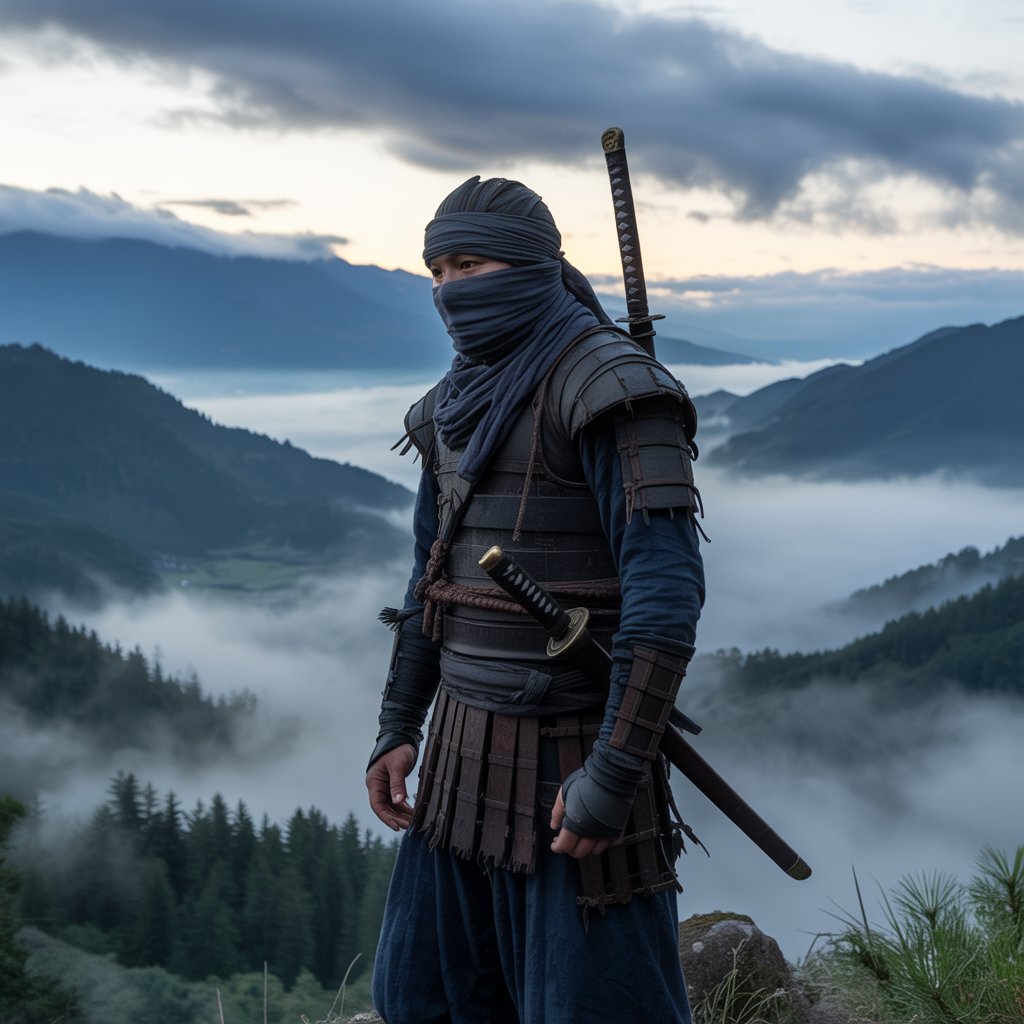
Today it appears everywhere — movies, comics, video games, Halloween costumes. Black-clad warriors leap across rooftops, throw smoke bombs, and disappear into the night. It’s entertaining, but it has very little to do with the reality of ninjutsu.
Behind the mythology lies something far more interesting: a set of martial traditions developed during one of the most turbulent periods in Japanese history. These traditions were not built for spectacle. They were created for survival.
Traditional ninjutsu emerged from war, secrecy, and necessity. Its knowledge moved quietly through generations of teachers and students, eventually finding its way into modern martial arts schools across the world.
To understand authentic ninjutsu, you have to start where it began — in the mountains of feudal Japan.
The Roots of Ninjutsu in Feudal Japan
A Country Defined by War
Between the 12th and 16th centuries, Japan lived through a near-constant cycle of political conflict. Regional warlords battled for territory and power, and alliances shifted with alarming speed.
Samurai armies dominated the battlefield. Their fighting style emphasized discipline, armor, and open combat.
But not every mission could be handled by soldiers marching in formation.
Sometimes information mattered more than strength.
Commanders needed people who could slip past enemy lines, observe troop movements, sabotage supply routes, or deliver messages without being detected. These operations required a completely different skill set.
That need gave rise to specialized operatives trained in infiltration, deception, and survival. Over time, their techniques evolved into what we now call ninjutsu.
Practical Skills Over Heroic Myths
Unlike modern portrayals, ninja were rarely supernatural warriors.
They were specialists.
Their training revolved around practical abilities that helped them survive dangerous missions:
-
Moving silently across different terrain
-
Disguising themselves to avoid suspicion
-
Escaping when confronted
-
Navigating unfamiliar landscapes
-
Gathering intelligence without being noticed
Success was measured not by defeating enemies in dramatic combat but by completing the mission and returning alive.
That pragmatic philosophy still shapes traditional ninjutsu training today.
The Regions That Shaped Ninja History
While elements of stealth warfare appeared throughout Japan, two regions became famous for developing organized ninja traditions: Iga and Kōga.
These areas would eventually become synonymous with the history of ninjutsu.
Iga Province: The Mountain Training Ground
Iga Province sat within a rugged mountainous region that made centralized control difficult. Local communities had to become self-reliant, developing their own methods of defense and communication.
Over generations, families in the region refined a set of skills perfectly suited for the terrain:
Night travel through forests.
Silent signals between allies.
Ambush tactics along narrow mountain paths.
These practices slowly evolved into Iga-ryū ninjutsu, one of the most influential ninja traditions in Japanese history.
Historical records suggest that warriors from Iga were occasionally hired by powerful feudal lords who needed intelligence gathering or covert operations carried out beyond enemy territory.
Their reputation spread, and the name “Iga ninja” became legendary.
Kōga Province: Structured Schools of Strategy
Just east of Iga lay Kōga Province, another region known for producing skilled ninja families.
Kōga traditions placed a strong emphasis on organized systems of training. Families maintained written records of techniques and strategic principles, passing them down to trusted successors.
Over time, dozens of Kōga-based martial lineages developed.
Each family maintained its own methods, but they shared a common focus: strategic thinking, adaptability, and disciplined preparation.
Together, the Iga and Kōga traditions formed the historical backbone of ninjutsu.
The Classical Ninjutsu Schools
Japanese martial traditions are preserved through ryū-ha, or classical schools. Each school carries a unique lineage of techniques, strategies, and philosophical teachings.
Several of these schools became closely associated with ninjutsu.
Togakure-ryū: The Most Famous Ninja Lineage
Among all ninja traditions, Togakure-ryū is perhaps the best known.
This school emphasizes fluid movement and strategic positioning. Rather than meeting force directly, practitioners learn how to evade, redirect, and exploit openings.
Training also includes the use of traditional tools historically associated with ninja missions, such as climbing devices and specialized weapons.
But the real heart of Togakure-ryū lies in adaptability — the ability to adjust instantly to changing circumstances.
Gyokushin-ryū: Intelligence Over Combat
Another classical lineage connected to ninjutsu is Gyokushin-ryū.
Where some martial schools focus on striking and grappling, Gyokushin-ryū placed greater emphasis on covert operations and information gathering.
Students studied rope techniques, infiltration strategies, and communication methods that could be used without attracting attention.
These skills reveal an important truth about ninjutsu: much of it had little to do with fighting.
The real objective was understanding and controlling situations before combat became necessary.
Kumogakure-ryū: Strategy Through Confusion
The lesser-known Kumogakure-ryū contains unusual tactical methods designed to confuse opponents and disrupt expectations.
Historical references describe unique weapon usage and movement patterns that made practitioners difficult to predict.
Although documentation about this school is limited, its teachings reinforce a central ninja principle: unpredictability can be more powerful than brute force.
How Ninjutsu Knowledge Survived
Martial arts traditions rarely survive for centuries by accident. They persist because someone chooses to protect them.
In the case of ninjutsu, preservation depended on two essential elements: written records and personal mentorship.
The Role of Densho Scrolls
Many traditional martial schools recorded their teachings in scrolls called densho.
These documents contained diagrams, strategic ideas, philosophical concepts, and fragments of technical instruction.
However, densho were never intended to function like modern training manuals.
They often used symbolic language or incomplete explanations. Without guidance from a teacher, the meaning could be impossible to interpret.
This protected the knowledge from falling into the wrong hands.
The Teacher–Student Tradition
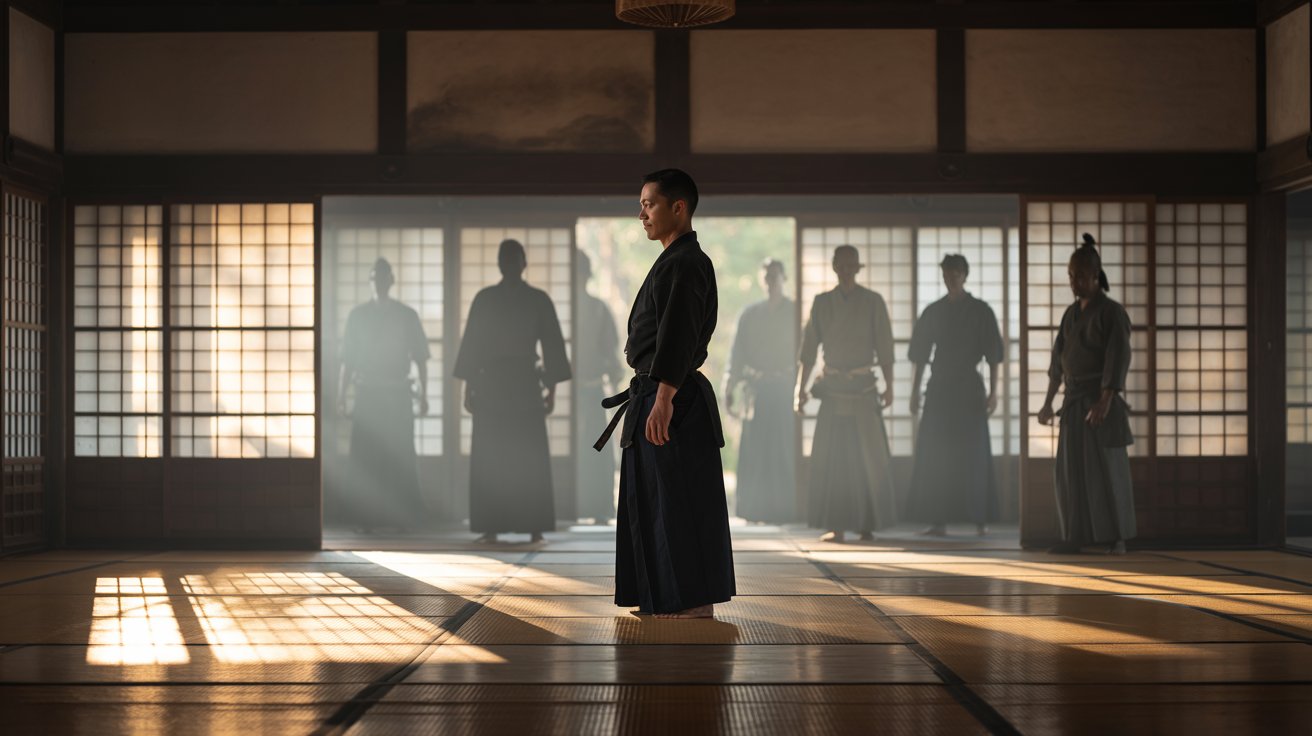
More important than scrolls was the direct relationship between master and student.
Students trained under a teacher for years, sometimes decades. Progress depended not only on technical skill but also on patience, discipline, and character.
As trust developed, deeper layers of the tradition were revealed.
This slow process ensured that the essence of ninjutsu survived intact rather than being diluted or misunderstood.
Ninjutsu in the Modern World
Japan changed dramatically during the modern era. Industrialization and political reform transformed the country, and many ancient traditions disappeared.
Yet some martial lineages survived.
Several organizations emerged in the twentieth century dedicated to preserving classical Japanese combat systems, including those connected to ninjutsu.
Bujinkan
The Bujinkan organization is one of the most widely known groups teaching traditional Japanese martial arts linked to ninja history.
Its training includes multiple classical schools, combining their principles into a broad curriculum focused on natural movement and adaptability.
Today, Bujinkan dojos exist in many countries.
Genbukan
The Genbukan organization maintains a structured system of training with an emphasis on historical accuracy and disciplined practice.
Students progress through clearly defined ranks while studying both the physical techniques and cultural background of the traditions.
Jinenkan
Another respected group is Jinenkan, which focuses heavily on understanding the mechanical principles behind classical techniques.
Training often explores how historical methods function in realistic scenarios, encouraging students to study movement deeply rather than simply memorizing forms.
Finding a Traditional Ninjutsu School Today
Interest in ninjutsu has grown worldwide, but not every school claiming to teach “ninja training” reflects authentic traditions.
Choosing the right environment requires careful evaluation.
Signs of a Legitimate School
Authentic dojos usually demonstrate several key characteristics:
-
A clear and documented lineage
-
Instructors with verifiable training history
-
Emphasis on discipline and long-term development
-
Study of historical context alongside techniques
Serious schools rarely present themselves as entertainment or theatrical performance.
What Training Actually Feels Like
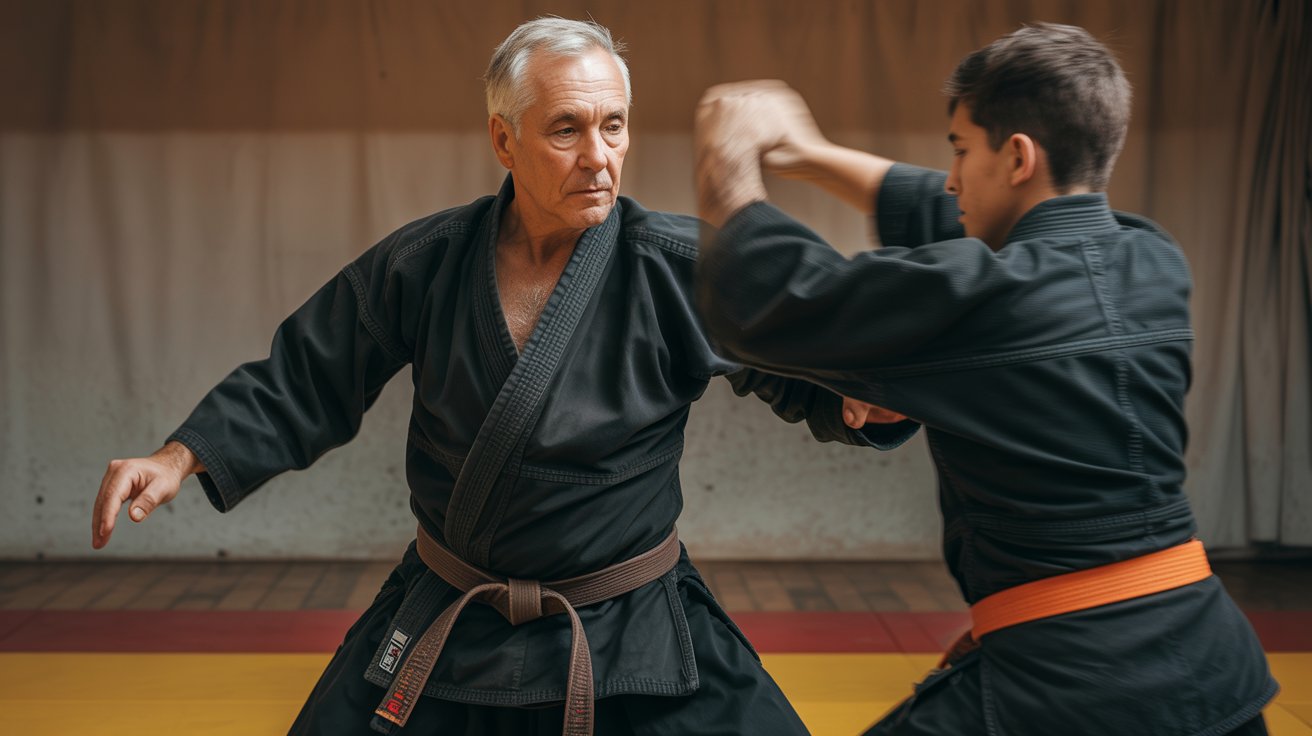
Students often discover that real ninjutsu training looks very different from movie scenes.
Classes may involve:
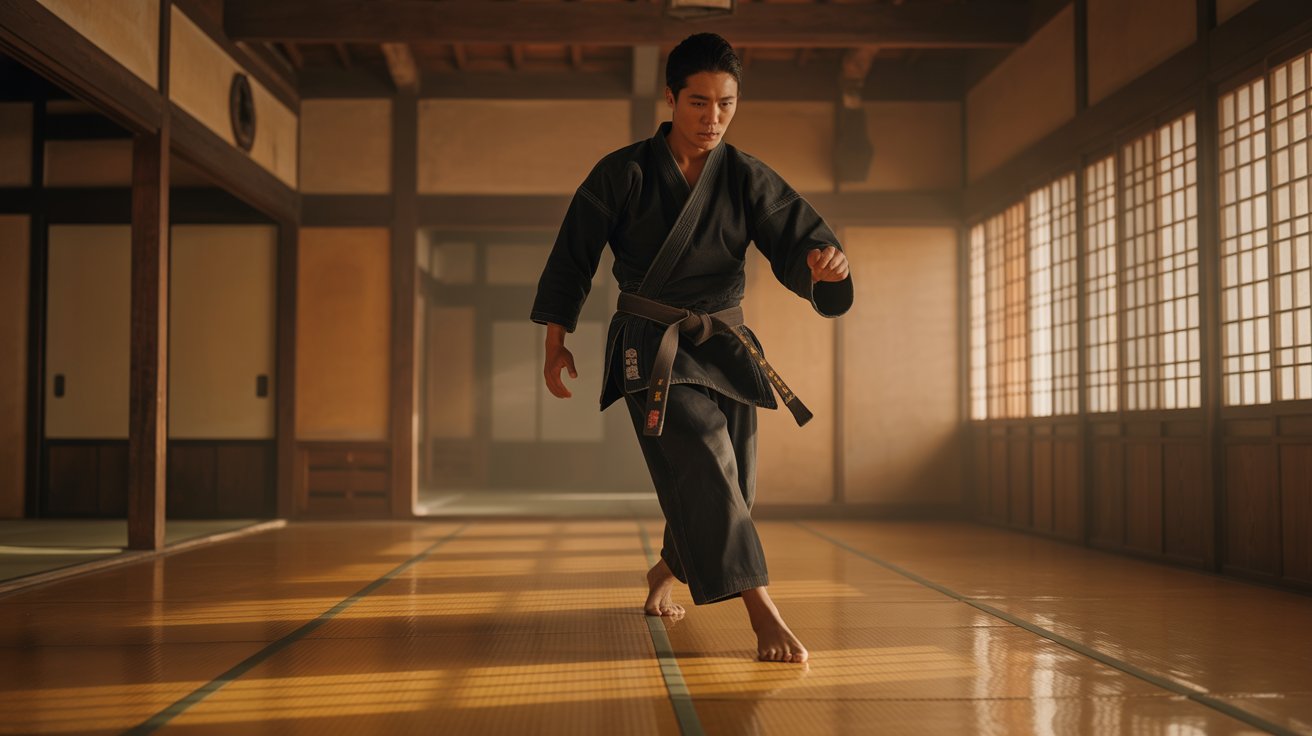
Slow movement drills.
Balance and coordination exercises.
Partner practice focused on timing and awareness.
Study of traditional weapons.
Strategy discussions about positioning and perception.
Progress is gradual, but the depth of the system becomes clearer over time.
Rather than flashy techniques, the goal is developing a body and mind capable of responding naturally to unpredictable situations.
FAQ: Traditional Ninjutsu Schools and Lineage
Is ninjutsu still practiced today?
Yes. Several organizations continue to teach martial systems derived from classical Japanese schools connected to ninja history.
Did real ninja wear black outfits?
Probably not. Historical evidence suggests that disguise and blending into normal environments were far more effective.
Can beginners learn ninjutsu?
Many schools accept beginners, but the training emphasizes patience and long-term dedication rather than quick results.
Is ninjutsu only about stealth?
No. Traditional training includes combat skills, strategy, survival methods, and mental discipline.
Products / Tools / Resources
If you’re interested in exploring traditional ninjutsu more deeply, these resources are often recommended within martial arts communities:
Books
-
The Way of the Ninja by Masaaki Hatsumi
-
Ninjutsu: History and Tradition by Masaaki Hatsumi
-
The Ninja and Their Secret Fighting Art by Stephen K. Hayes
Training Equipment
-
Wooden practice swords (bokken)
-
Training staff (bo)
-
Traditional martial arts uniforms (keikogi)
Organizations to Research
-
Bujinkan Dojo International
-
Genbukan Ninpo Bugei
-
Jinenkan Traditional Martial Arts
These resources provide a starting point for anyone curious about the historical roots of ninjutsu and the traditions that still preserve it.