The Man People Still Argue About
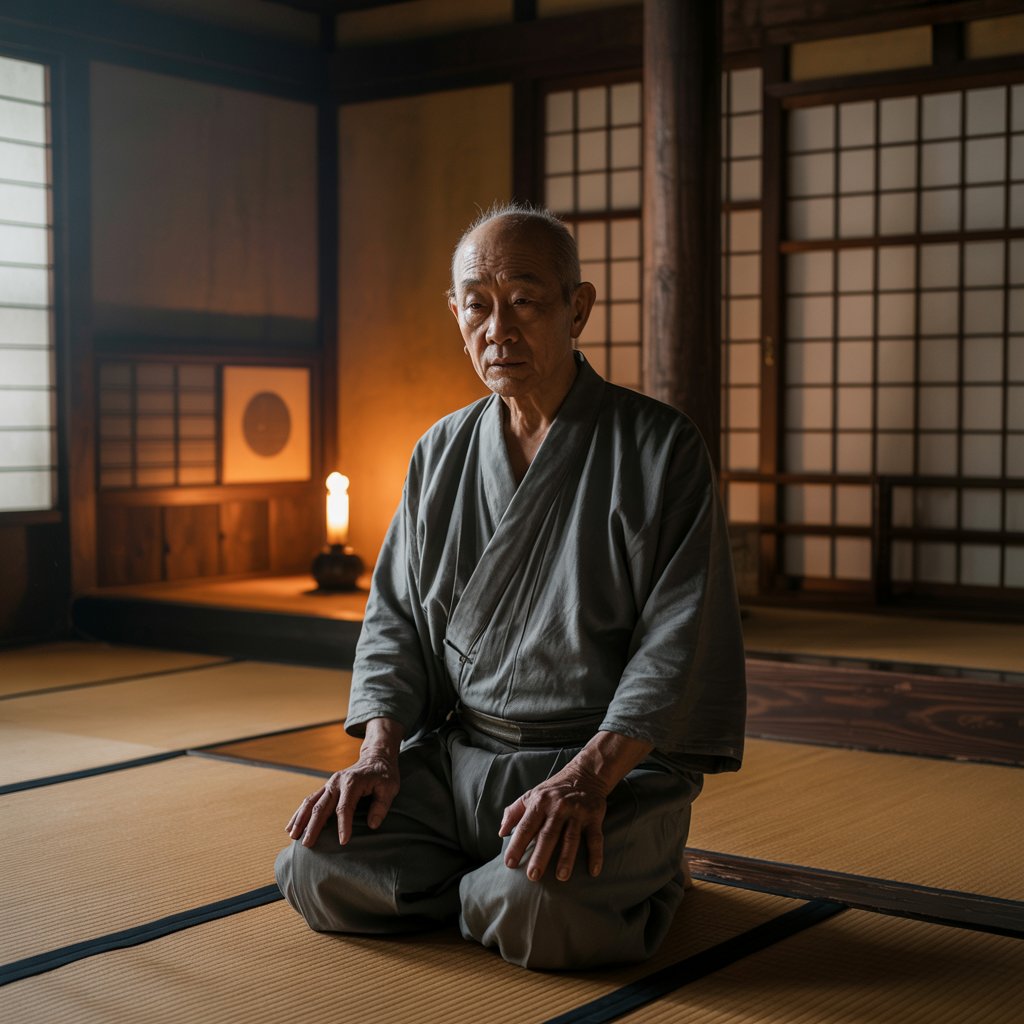
There’s something unusual about Toshitsugu Takamatsu. Not just what he taught—but what he represents.
Some see him as the last authentic link to Japan’s shadow traditions. Others see gaps, inconsistencies, things that don’t quite line up. And yet… his influence never fades. If anything, it keeps spreading.
He wasn’t just a martial artist. He was a carrier of something older—something that doesn’t translate cleanly into modern language.
Where It Started
Born at the tail end of the samurai era, Takamatsu grew up in a world that was already changing. The old ways weren’t gone—but they were slipping.
His training began early, and it wasn’t casual. Under Toda Shinryuken Masamitsu, he was exposed to systems that weren’t designed for demonstration or sport. These were systems built for survival—passed down quietly, often without explanation.
You didn’t just learn techniques. You absorbed perspective.
Training That Wasn’t Meant to Be Understood Quickly
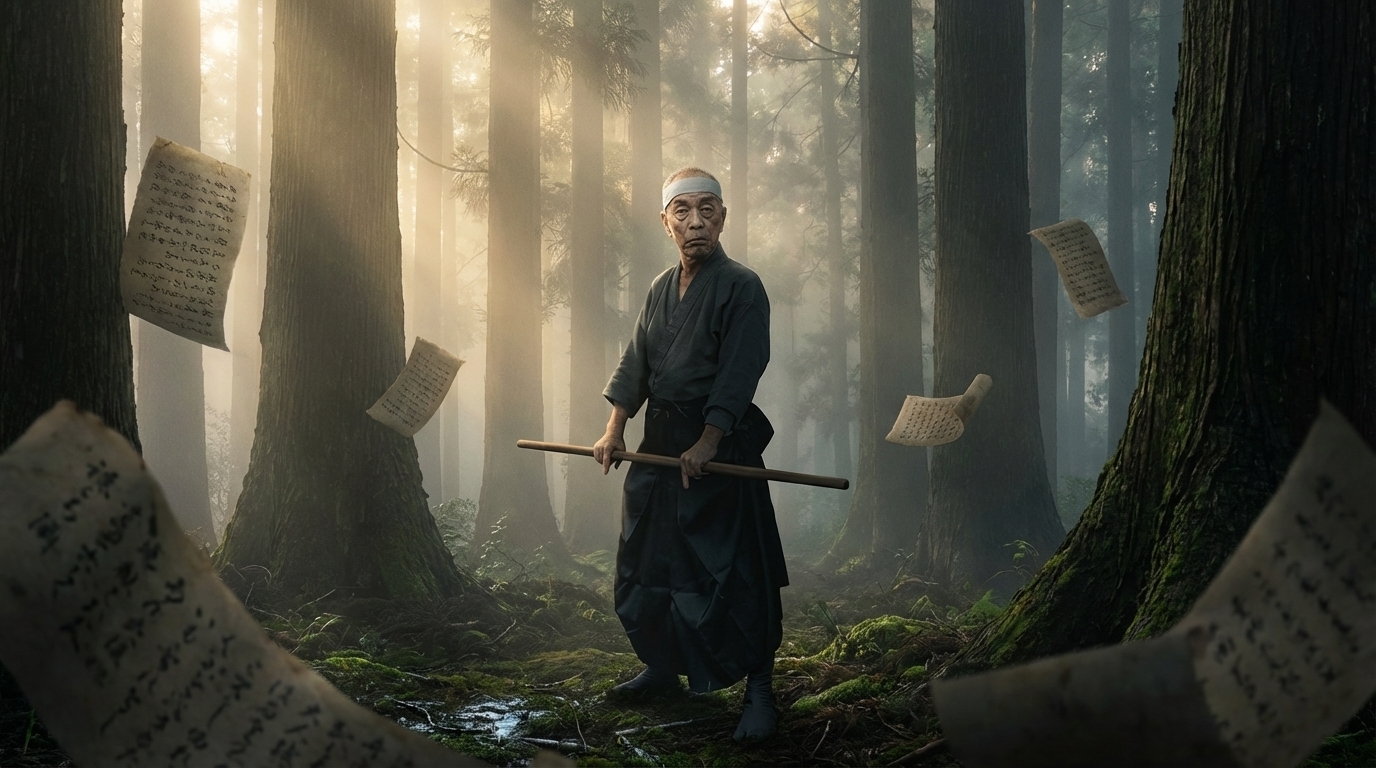
There’s a reason densho scrolls confuse people.
They’re not step-by-step guides. They’re fragments—symbols, phrases, diagrams—that only make sense when paired with lived experience. Without that, they feel incomplete. With it, they become something else entirely.
That’s how Takamatsu learned. Not by memorizing, but by internalizing.
Why Lineage Still Matters More Than People Think
In modern martial arts, it’s easy to focus on effectiveness, speed, efficiency.
But lineage isn’t about performance. It’s about continuity.
A ryu-ha isn’t just a style—it’s a way of seeing conflict, movement, and even human behavior. Each one carries its own logic, its own rhythm.
And when someone inherits multiple lineages, like Takamatsu did, they’re not just learning more—they’re seeing more.
The Nine Traditions That Define Takamatsu-den
This is where things get layered.
Takamatsu didn’t represent a single system. He carried nine. Each one adds a different lens—sometimes complementary, sometimes contradictory.
Togakure-ryu leans into evasion and unpredictability.
Gyokko-ryu sharpens precision—targeting structure instead of brute force.
Koto-ryu moves in the opposite direction—direct, aggressive, decisive.
Then you have Kukishinden-ryu, which broadens everything—weapons, strategy, battlefield awareness.
Shinden Fudo-ryu strips things back, emphasizing natural movement.
Takagi Yoshin-ryu closes distance, dealing with tight, confined encounters.
And then there are the quieter systems—Gikan-ryu, Kumogakure-ryu, Gyokushin-ryu—less documented, more elusive, but no less important.
Taken together, they don’t form a single method. They form a network.
Passing It On Without Losing It
When Takamatsu passed these teachings to Masaaki Hatsumi, something shifted.
For generations, this knowledge had been tightly controlled. Suddenly, it began to open.
But that creates tension.
Because once something spreads, it changes. Interpretation creeps in. Gaps widen. Some things get clearer—others get lost.
Hatsumi didn’t just preserve the art. He translated it for a different world.
The Debate That Never Really Ends
If you spend enough time around this topic, you’ll notice a pattern.
Some people want proof—documents, timelines, verification. Others accept the oral tradition as part of the system itself.
Both sides have a point.
There are gaps. There are inconsistencies. But there’s also continuity—visible in the way the art is practiced, taught, and experienced.
And maybe that tension is part of what keeps it alive.
What Makes This Lineage Different
Most systems separate things—technique, strategy, philosophy.
This one doesn’t.
Everything overlaps.
Movement isn’t just physical—it’s psychological. Strategy isn’t just external—it’s internal. Even stillness becomes part of the system.
And that’s where Takamatsu’s lineage stands apart.
It doesn’t just teach you how to fight.
It changes how you interpret conflict entirely.
Products / Tools / Resources
If you want to explore this lineage further, a few entry points stand out:
-
Books by Masaaki Hatsumi (especially those covering Togakure-ryu and Bujinkan philosophy)
-
Historical texts on koryu (classical Japanese martial traditions)
-
Documentaries and interviews featuring Bujinkan practitioners
-
Dojo directories for authentic Bujinkan training centers
-
Densho translation studies (for deeper theoretical exploration)