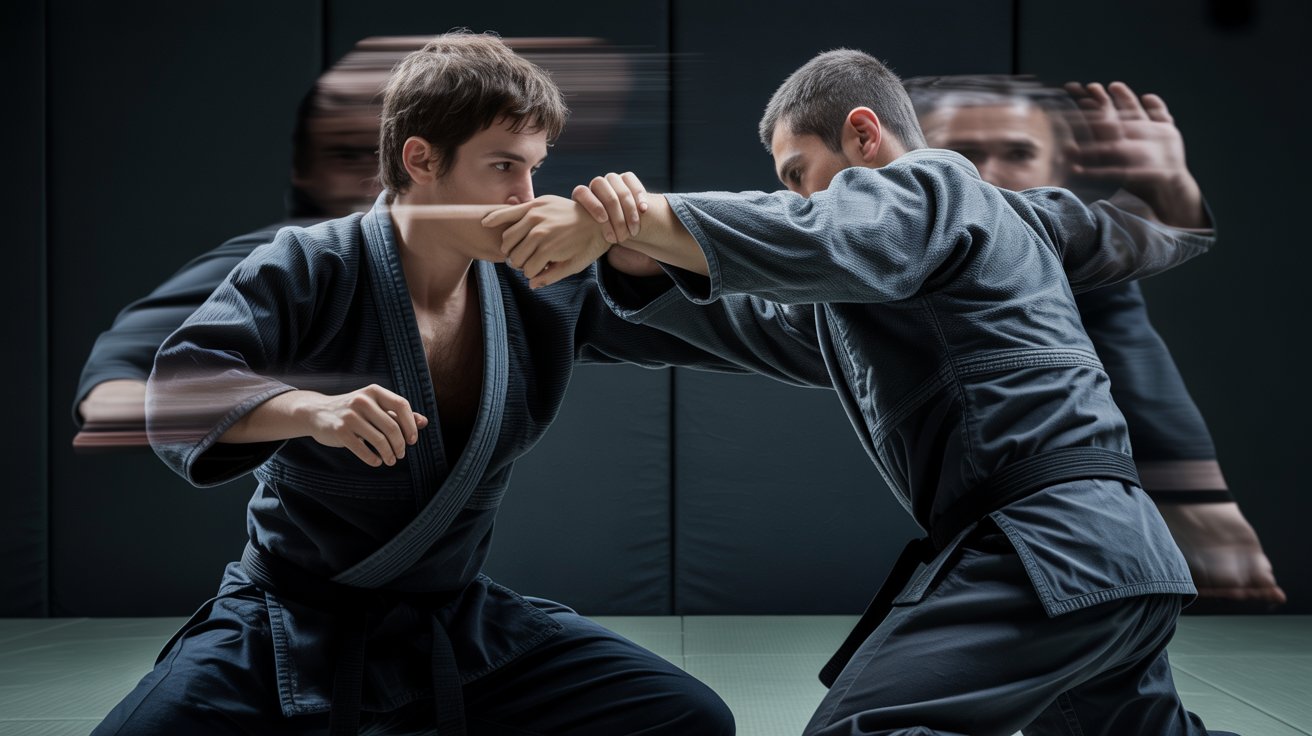
There’s something fascinating about the way the ancient ninja approached danger. They didn’t rely on brute strength. They didn’t fight for spectacle or competition. Their training focused on something far simpler—and far more important.
Survival.
The martial traditions associated with ninjutsu were designed for situations where rules didn’t exist. Ambushes. Escapes. Encounters where the smartest move wasn’t to fight harder, but to move smarter.
That’s why many of these ideas still hold value today. Modern self-defense often revolves around the same goals the ninja pursued centuries ago: stay aware, stay mobile, and escape danger as quickly as possible.
Below are seven principles and techniques from ninjutsu that can dramatically improve the way you think about personal safety.
Why Ninjutsu Works So Well for Real-World Self Defense
Before looking at specific techniques, it helps to understand why ninjutsu translates so naturally into modern self-defense.
Survival Was Always the Priority
Most martial arts practiced today exist as sports. They’re built around rules, scoring systems, and competition.
Ninjutsu came from a different world.
Its purpose was never to win matches. It was to help practitioners survive unpredictable situations, often against stronger or multiple opponents.
That mindset changes everything. Instead of trading blows, ninjutsu focuses on disrupting attacks, creating openings, and getting away safely.
Efficiency Matters More Than Strength
Another defining feature of ninjutsu is its reliance on leverage and body mechanics.
A smaller person can’t realistically overpower a larger aggressor through force alone. But by using angles, timing, and balance disruption, they can create opportunities to escape.
It’s less about fighting harder and more about moving intelligently.
Thinking Strategically in Dangerous Moments
Ninjutsu also trains the mind.
Practitioners learn to read situations, manage distance, and recognize early warning signs of danger. These mental skills are often the difference between avoiding a confrontation and being caught in one.
With that mindset in place, the techniques begin to make more sense.
Technique #1 – Escaping a Wrist Grab
One of the most common ways a confrontation begins is with a grab—usually the wrist or arm.
Most people instinctively try to yank their hand straight back. Unfortunately, that reaction usually tightens the attacker’s grip.
Ninjutsu approaches the problem from another angle.
Find the Weak Point
Every grip has a natural weakness where the thumb meets the fingers. Instead of pulling straight away, the wrist is rotated toward that gap while stepping slightly back or to the side.
That small adjustment often breaks the hold with surprisingly little effort.
Move Immediately After
The moment the grip loosens, the defender shifts position. A simple step to the side can throw off the attacker’s balance and prevent them from grabbing again.
The entire idea is simple: escape quickly instead of wrestling for control.
Technique #2 – Breaking an Attacker’s Balance
Balance is the foundation of every movement. Once someone loses it, their ability to attack effectively drops dramatically.
Ninjutsu makes constant use of this principle.
Use Angles Instead of Force
Instead of pushing directly against an attacker, practitioners step slightly off the line of attack while guiding the opponent’s movement.
Even a small redirection of their weight can cause them to stumble.
Timing Is Everything
The best moment to disrupt balance isn’t after the attack—it’s during the movement itself.
A subtle step combined with a gentle push or pull can send an attacker off balance before they even realize what happened.
This technique allows defenders to stay in control without relying on strength.
Technique #3 – Joint Locks for Control
Joint manipulation is another important element of traditional ninjutsu training.
These techniques focus on controlling an attacker by applying pressure to joints that are vulnerable when bent the wrong way.
Wrist Locks
The wrist is surprisingly fragile when rotated at certain angles. By guiding the wrist while controlling the elbow, a defender can create enough discomfort to force the attacker to release their grip.
Elbow Control
The elbow joint only bends in one direction. When pressure is applied against that natural movement, the attacker often loses their ability to resist.
This allows the defender to guide them away, off balance, or toward the ground without throwing punches.
The goal is simple: control the situation long enough to escape.
Technique #4 – Targeting Sensitive Areas
Some ninjutsu methods involve quick strikes or presses to sensitive points on the body.
These areas aren’t mystical secrets—they’re simply places where nerves sit close to the surface.
Common examples include:
-
the hinge of the jaw
-
the side of the neck
-
the inside of the forearm
A quick strike to these areas can create a moment of distraction or discomfort that opens the door for escape.
Training emphasizes accuracy and restraint, since these techniques can cause real injury if used carelessly.
Technique #5 – Mastering Evasion and Footwork
Perhaps the most important lesson from ninjutsu is this:
Standing directly in front of danger is rarely the best option.
Instead of confronting force head-on, practitioners move around it.
Circular Movement
By stepping in curved or circular paths, a defender can slip past incoming attacks and reposition themselves.
This movement also forces the attacker to constantly turn, which weakens their balance.
Let the Attacker’s Energy Work Against Them
When someone charges forward with force, they’re committed to that direction. Ninjutsu takes advantage of that momentum by stepping aside and guiding it past the target.
Suddenly the attacker finds themselves moving where the defender used to be.
And the defender is already somewhere safer.
Technique #6 – Handling Larger Opponents
Facing someone bigger is intimidating, but size alone doesn’t determine the outcome of a confrontation.
Ninjutsu addresses this challenge through leverage and positioning.
Break the Attacker’s Structure
Every person relies on alignment between their head, shoulders, and hips to stay balanced.
If that alignment is disrupted—by pulling an arm across the body or guiding their weight past their center—the entire structure weakens.
Look for Moments of Instability
Balance constantly shifts during movement.
When someone steps forward, throws a punch, or reaches to grab, their weight briefly shifts in a vulnerable way.
Recognizing those moments creates opportunities to escape.
Technique #7 – Creating Space and Getting Away
In real self-defense, the objective is never to “win” a fight.
The objective is to get out safely.
Create Distance
After disrupting the attacker’s balance or grip, the next step is to move away quickly. Distance reduces the attacker’s ability to grab or strike again.
Leave Immediately
Too many confrontations escalate because people stay engaged longer than necessary.
Ninjutsu teaches the opposite approach. When the opportunity to leave appears, you take it.
No hesitation.
Because survival always matters more than pride.
Frequently Asked Questions
Is ninjutsu practical for real-world self defense?
Many of its principles—awareness, leverage, and balance disruption—translate well to modern personal safety situations.
Can beginners practice these techniques?
Basic movement and awareness exercises can be practiced by beginners, but learning with experienced instruction is recommended for proper safety and technique.
Do you need strength to use ninjutsu?
Not necessarily. Many techniques rely more on timing, positioning, and leverage than physical strength.
Products / Tools / Resources
Training Equipment
• Grappling dummy for practicing joint locks
• Wrist strengthening tools for grip training
• Martial arts training mats for safe drilling
Learning Resources
• Beginner ninjutsu instructional courses
• Martial arts self-defense training programs
• Situational awareness and personal safety workshops
Recommended Training Habits
• Practice balance and footwork drills regularly
• Train slow and controlled when learning joint locks
• Study situational awareness as much as physical technique