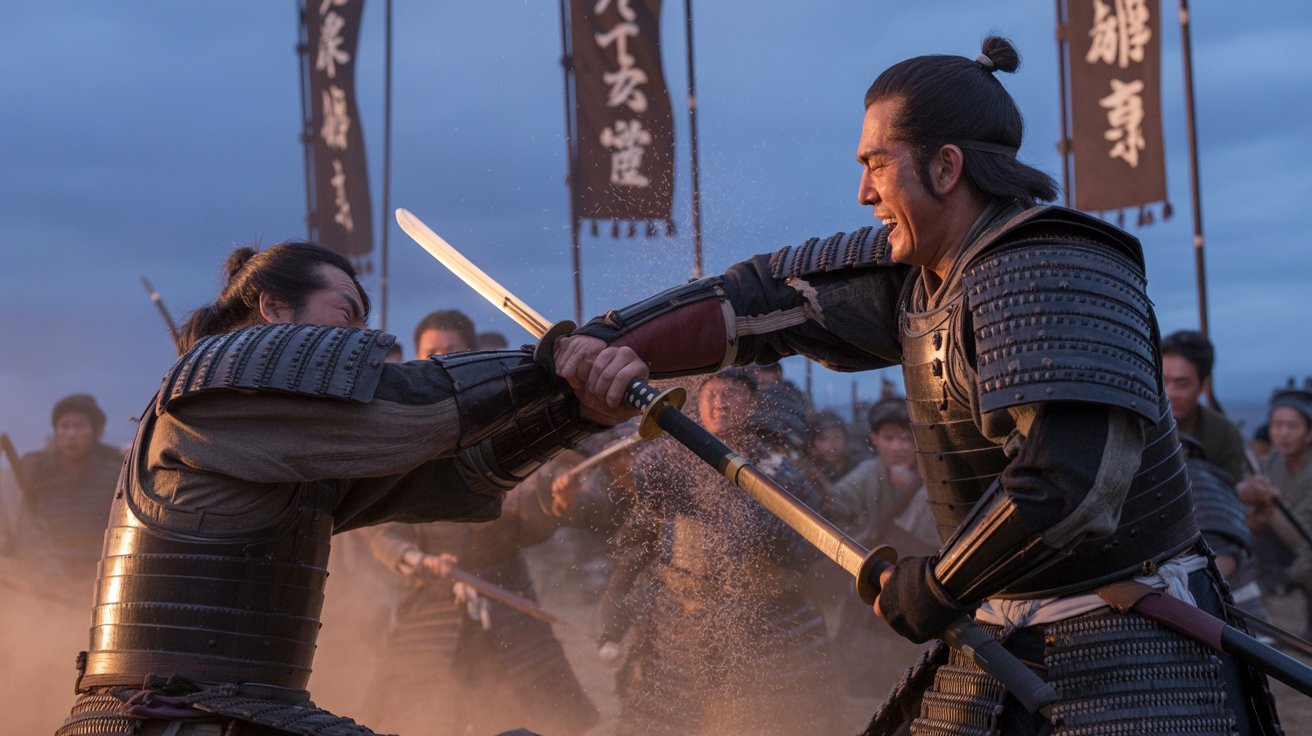
There’s something different about Koto Ryu.
You feel it the first time you see the movement—sharp, direct, uncompromising. No excess motion. No decorative flow. Just structure meeting structure.
To understand Koto Ryu Koppojutsu history and origins, you have to step away from the comfort of modern training halls and walk backward into feudal Japan—into armor, into dust, into the kind of combat where hesitation was fatal.
This isn’t just a martial system. It’s a survival language forged in pressure.
What Koto Ryu Really Is
Koto Ryu Koppojutsu is one of the classical Japanese martial traditions preserved today within the Bujinkan organization. It belongs to the world of koryū—old schools whose techniques were shaped by real conflict, not sport.
“Koppojutsu” is often translated as “bone method” or “bone breaking techniques.” And that isn’t poetic exaggeration.
Where some systems focus on muscle manipulation or grappling control, Koto Ryu aims at structure. Bones. Joints. Alignment. The skeletal framework that keeps a body standing.
Disrupt that, and the fight ends quickly.
The name “Koto” is commonly interpreted as “knocking down the tiger.” Whether literal or symbolic, the meaning reflects the system’s mindset: confront directly, overwhelm decisively, finish efficiently.
In the Bujinkan structure, Koto Ryu sits alongside schools such as Gyokko Ryu and Togakure Ryu. Each carries its own combat identity. Koto Ryu’s signature? Linear entry. Angular positioning. Relentless counter-offense.
It doesn’t retreat when pressured. It steps in.
The Meaning Behind Koppojutsu
To understand the origins of Koto Ryu Koppojutsu, you need to understand its method.
Unlike kosshijutsu, which targets muscle and soft tissue, koppojutsu attacks the frame itself. The collarbone. The ribs. The knees. The elbows. Structural weak points.
These weren’t random targets.
On a battlefield where armor covered most of the body, fighters searched for gaps. Precision mattered. A small opening near a joint could mean survival. A fraction of a second could mean death.
Koto Ryu techniques evolved in that environment. Movements are compact. Strikes are tight. Footwork is controlled and purposeful.
There’s no wasted motion—because wasted motion once carried consequences.
Psychologically, this builds a specific mindset: commitment. In Koto Ryu, hesitation disrupts structure—your own before your opponent’s.
The Muromachi Period: Where It Began
The traditional origins of Koto Ryu trace back to the Muromachi period (1336–1573), a time when Japan was fractured by conflict. Political instability gave rise to regional warfare that would later intensify during the Sengoku era.
This was not a peaceful time.
Martial systems weren’t hobbies or self-improvement paths. They were survival technologies passed privately within warrior families and trusted circles.
The founding of Koto Ryu is traditionally attributed to Sakagami Taro Kunishige. As with many classical martial traditions, written documentation from the earliest period is limited. Wars destroyed records. Secrecy protected knowledge.
Transmission relied on densho—scrolls containing techniques and principles—combined with direct oral instruction from teacher to student.
Lineage wasn’t advertised. It was guarded.
And that secrecy became part of the art’s identity.
Samurai Politics and the Warrior Class
To understand the history of Koto Ryu Koppojutsu, you must understand the warrior culture that shaped it.
Samurai operated within strict hierarchies. Loyalty shifted. Alliances broke. Castle sieges were real. Ambushes were common.
Techniques had to function in armor. In confined spaces. On uneven terrain.
Koto Ryu’s linear aggression reflects this context. When retreat wasn’t an option and space was limited, stepping inside an opponent’s attack—collapsing their structure before they could recover—made sense.
The art developed efficiency because inefficiency was punished immediately.
Only what worked survived.
Preservation During the Edo Period
When Tokugawa rule established relative peace in the early 1600s, large-scale warfare decreased. This created a dilemma for martial schools.
How do you preserve battlefield relevance in peacetime?
For Koto Ryu, the answer was kata.
Pre-arranged forms became living archives. Within them were encoded timing, distancing, structural alignment, and psychological strategy. The kata were not choreography—they were compressed lessons in survival logic.
Through repetition and transmission, these forms carried the DNA of earlier centuries into a calmer era.
Without this codification, many koryū systems might have disappeared.
Toda Shinryuken and Transitional Lineage
In later lineage accounts, Toda Shinryuken Masamitsu is cited as a key figure in preserving Koto Ryu teachings.
As with many classical Japanese martial arts, historical records blend documentation with oral tradition. What remains consistent, however, is the continuity of named transmitters—each passing the system forward.
In traditional Japanese martial culture, an unbroken teacher-student lineage carries enormous weight. It is considered proof of legitimacy beyond public documentation.
Koto Ryu’s lineage continuity becomes one of its strongest markers of authenticity.
Takamatsu Toshitsugu: The Modern Revival
The late 19th and early 20th centuries were transformative for Japan. Rapid modernization, Western influence, and cultural shifts threatened many traditional practices.
Takamatsu Toshitsugu emerged during this period as a central preservation figure. He inherited multiple martial lineages, including Koto Ryu.
Stories of his training and real-world combat experiences—particularly in China—have become part of martial lore. Regardless of embellishment, his role in transmitting Koto Ryu into the modern era is pivotal.
Without Takamatsu, Koto Ryu Koppojutsu may not have survived intact.
Masaaki Hatsumi and the Bujinkan Era
Masaaki Hatsumi, a direct student of Takamatsu Toshitsugu, became inheritor of several classical martial traditions and founded the Bujinkan organization.
Through the Bujinkan, Koto Ryu Koppojutsu spread globally.
Today, practitioners around the world study its kata, principles, and tactical mindset. While pedagogy adapts to modern students, the structural core remains intact.
Koto Ryu continues to be practiced not as a relic—but as a living tradition.
Koto Ryu vs Gyokko Ryu: A Tactical Contrast
A common question in discussions about Koto Ryu history and origins involves its relationship to Gyokko Ryu.
The contrast is revealing.
Gyokko Ryu emphasizes circular movement, evasive angles, and soft tissue targeting. Koto Ryu favors linear entry, angular alignment, and skeletal disruption.
One yields and redirects. The other crashes through.
Together, they create strategic balance within the broader Bujinkan curriculum.
Individually, each represents a distinct combat philosophy shaped by historical necessity.
Myth, Documentation, and Authenticity
Because Koto Ryu’s origins stretch back centuries, complete historical verification is challenging.
Densho scrolls exist. Oral traditions persist. Named lineages provide continuity. But medieval Japanese record-keeping was inconsistent, and warfare destroyed countless archives.
Authenticity in classical martial arts is not measured by modern academic standards alone. It is measured by:
-
Lineage continuity
-
Technical consistency
-
Preserved kata structures
-
Direct transmission through recognized grandmasters
By those markers, Koto Ryu stands firmly within the tradition of legitimate koryū systems.
Why the Origins Still Matter
Studying the history of Koto Ryu Koppojutsu changes how the art feels.
When you understand that a movement was designed for armored confrontation, you stop performing it casually. When you recognize that structural collapse once meant survival, your training sharpens.
The past isn’t abstract.
It lives in the angles of the stance.
In the precision of the strike.
In the refusal to hesitate.
Koto Ryu’s origins are not simply historical—they are psychological. They train decisiveness, commitment, and structural awareness.
That is why the lineage still matters.
Products / Tools / Resources
If you’re serious about exploring the history and practice of Koto Ryu Koppojutsu, these resources can deepen your understanding:
-
Bujinkan Dojo Directory – To find certified instructors teaching authentic lineage-based material.
-
Books by Masaaki Hatsumi – Particularly those detailing classical ryu-ha principles and philosophy.
-
Koryū History Texts – Academic works on Muromachi and Sengoku martial culture provide valuable context.
-
Seminars and Taikai Events – Direct exposure to high-level instruction preserves subtle technical details often lost in translation.
-
Densho Study Groups – For advanced practitioners seeking deeper historical insight.
- Bujinkan Black Belt Course
Approach the study patiently. Koto Ryu reveals itself layer by layer—history through movement, lineage through repetition.