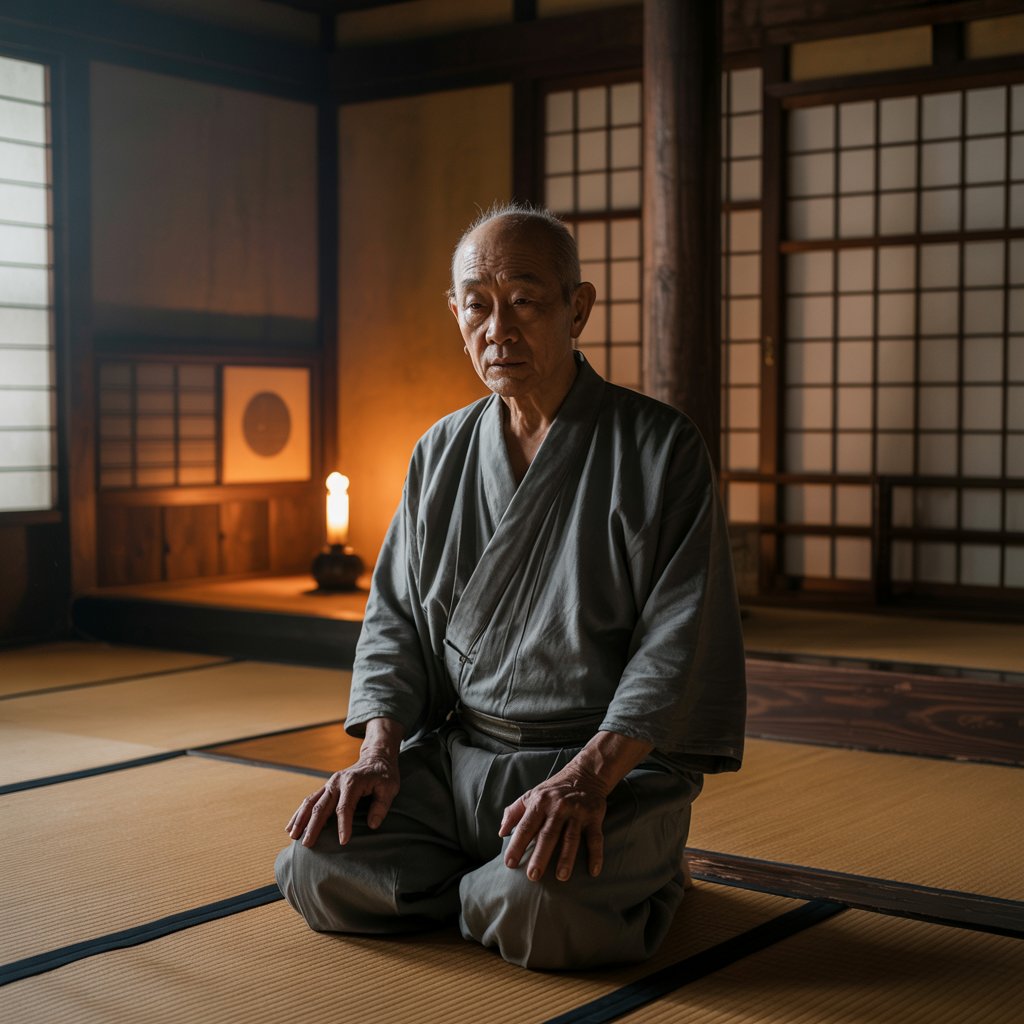
The word ninja has been stretched, flattened, and commercialized to the point where it barely resembles what it once meant. Masks, theatrics, fantasy. Easy imagery. Disposable myths.
But every so often, a name cuts through the noise—not because it fits the story people want, but because it doesn’t.
Toshitsugu Takamatsu is one of those names.
He didn’t market himself. He didn’t perform for crowds. He didn’t dress the part or chase recognition. And that’s precisely why his legacy refuses to fade. If Takamatsu unsettles modern narratives, it’s because he lived in a space that no longer exists—where violence was real, survival mattered, and skill was tested outside controlled environments.
To understand whether Toshitsugu Takamatsu was a ninja, you first have to let go of the costume.
A Life Formed Between Eras
Takamatsu was born in 1889, at a time when Japan was dismantling its old warrior identity. The Meiji Restoration had stripped the samurai of their legal status. Swords were banned. Western systems replaced ancient ones. Martial traditions were either modernized, hidden, or lost altogether.
But some knowledge didn’t disappear. It went quiet.
Takamatsu grew up immersed in classical martial traditions—koryū bujutsu—systems never designed for sport or public consumption. These were methods built for unpredictability, uneven terrain, surprise attacks, and survival against superior numbers.
This wasn’t nostalgia. It was continuity.
Lineage Without Labels
Accounts often point to his grandfather, Toda Shinryuken Masamitsu, as a key influence. Toda represented something increasingly rare: a bridge between older combative systems and a rapidly modernizing world.
What’s striking is that nowhere in Takamatsu’s early life do we see him calling himself a ninja. That term had already begun to dissolve. What remained were teachings—strategy, deception, movement, psychological dominance—passed without theatrical framing.
The absence of the label is not a weakness of the claim.
It’s evidence of authenticity.
What “Ninja” Meant Before It Meant Nothing
Modern debates around the toshitsugu takamatsu ninja question often collapse because they rely on the wrong definition.
Historically, shinobi were not defined by clothing or assassination contracts. They were defined by function.
They gathered intelligence.
They survived hostile environments.
They avoided fair fights.
They won before the fight began.
These skills weren’t separate from martial systems—they were embedded within them.
Takamatsu’s teachings emphasized adaptability over form, intent over technique, and survival over victory. He taught that rigidity gets you killed. That timing outweighs strength. That awareness decides outcomes before weapons ever move.
Those principles align far more closely with historical shinobi methodology than with anything found in modern combat sports.
Violence Without Applause
One reason Takamatsu’s life feels difficult to verify today is that it unfolded far from cameras, records, or official oversight.
That wasn’t unusual at the time.
Encounters That Didn’t Make Headlines
Stories passed down by students describe real confrontations—challenges from other martial artists, street fights, and violent encounters that were neither planned nor documented. These weren’t dojo tests. They were moments where failure had consequences.
The details vary. Memory always does. But the pattern remains consistent: Takamatsu didn’t seek conflict, yet he didn’t avoid it when survival demanded otherwise.
China: Where Philosophy Was Forged
Perhaps the most formative period of his life occurred outside Japan. In China, Takamatsu worked as a bodyguard and reportedly faced frequent ambushes and attacks. This was not romanticized violence. It was chaotic, unfair, and relentless.
That environment reshaped his outlook.
He taught later that techniques are tools, not guarantees. That spirit, timing, and psychological control matter more than physical dominance. These aren’t ideas born in safe spaces. They come from repeated exposure to real danger.
Why Takamatsu Matters at All
Many skilled martial artists lived and died without leaving a ripple. Takamatsu didn’t just fight. He transmitted.
Knowledge That Should Have Vanished
By the mid-20th century, many classical systems had either been diluted or erased. Takamatsu preserved teachings that didn’t fit modern frameworks—systems too dangerous, too subtle, or too ethically complex for public instruction.
Some lineages attributed to him are debated academically. That debate matters. But what often gets overlooked is the internal consistency of the material passed down. These weren’t reconstructed techniques. They behaved like systems shaped by use.
That distinction is difficult to fake.
Choosing Masaaki Hatsumi
Late in life, Takamatsu selected Masaaki Hatsumi as his successor. Hatsumi would eventually bring these teachings into the global spotlight through the Bujinkan.
This wasn’t an act of self-promotion. Takamatsu avoided attention. He chose someone he believed would preserve the spirit of the teachings, not sanitize them for comfort.
That choice alone speaks volumes about how he viewed the responsibility of transmission.
Why the Myths Exist
Whenever history leaves gaps, stories rush in to fill them.
Some tales surrounding Toshitsugu Takamatsu are exaggerated. That’s unavoidable with oral traditions. But exaggeration does not equal fabrication. The core facts—his training, his travels, his students, his influence—remain anchored in multiple independent accounts.
What’s missing are bureaucratic records.
And that absence tells its own story.
Ninja knowledge was never designed to be archived. It survived precisely because it wasn’t documented in the ways modern historians prefer.
So Was Toshitsugu Takamatsu a Ninja?
If the question demands a costume, a title, or cinematic confirmation, the answer will always be unsatisfying.
But if ninja is understood as a practitioner of survival-based, deceptive, unconventional warfare—knowledge passed quietly, tested brutally, and preserved without spectacle—then the answer becomes much clearer.
Toshitsugu Takamatsu was not a character.
He was a closing chapter.
Products / Tools / Resources
-
Books by Masaaki Hatsumi – Primary written access to teachings transmitted directly from Takamatsu
-
Bujinkan Training Materials – Modern continuation of Takamatsu’s martial legacy
-
Koryū Martial Arts Texts – Contextual grounding for pre-modern Japanese combat systems
-
Historical Research on Shinobi & Samurai Transition Era – Essential for separating myth from function