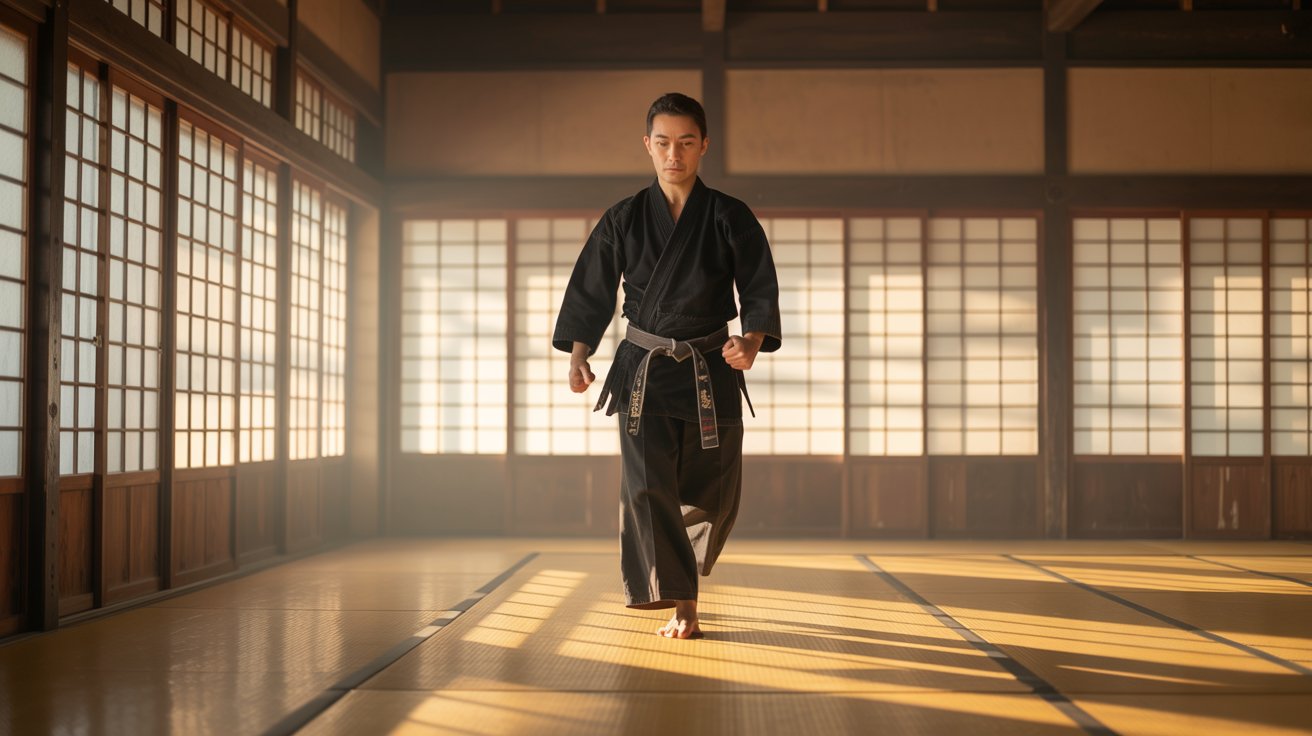
When people search for a bujinkan dojo near me, they’re rarely just looking for exercise. Something else is pulling them. A sense that what they’re after isn’t loud, commercial, or obvious—but quiet, old, and difficult to fake.
That instinct is usually right.
Bujinkan training doesn’t announce itself. It doesn’t sparkle. And it definitely doesn’t try to impress you on day one. Which is exactly why finding an authentic dojo can feel confusing at first.
This guide exists to help you cut through that confusion.
What a Bujinkan Dojo Actually Is
A Bujinkan dojo isn’t a franchise. It isn’t a standardized curriculum. And it’s not built around winning or losing.
At its core, the Bujinkan is a living transmission of nine classical Japanese martial schools, passed down through Masaaki Hatsumi, who inherited them directly from his teacher, Toshitsugu Takamatsu.
That lineage matters more than most people realize.
Without it, what’s left might look like ninjutsu—but it won’t feel like it.
Why Bujinkan Feels Different Immediately
People used to modern martial arts often struggle to describe their first Bujinkan class. There’s movement, but no fixed answers. Techniques appear, then dissolve. Corrections are subtle. Progress is implied rather than announced.
That’s intentional.
Bujinkan training is designed to develop adaptability, awareness, and natural movement—not performance. Over time, students learn to respond rather than react. To feel distance instead of measuring it. To move without forcing outcomes.
How to Tell If a Bujinkan Dojo Near You Is Legit
This is where most beginners get stuck—and where most mistakes are made.
A legitimate Bujinkan dojo won’t promise results. It won’t guarantee rank. And it probably won’t try very hard to sell itself to you.
Instead, look for clarity.
The instructor should be able to explain:
-
Who they trained under
-
Their connection to the Bujinkan organization
-
How long they’ve been training
-
Why they still train
None of this is secret. It’s simply part of the art.
Warning Signs You Shouldn’t Ignore
If you hear things like:
-
“Ancient secrets revealed”
-
“Guaranteed black belt”
-
“Deadly techniques banned elsewhere”
…pause.
Real Bujinkan training doesn’t need exaggeration. Its depth shows itself over time.
What Training in a Bujinkan Dojo Feels Like
Classes rarely follow a rigid structure. Beginners and advanced students often train together. Demonstrations are brief. Corrections are personal.
You might feel lost at first. That’s normal.
Progress in Bujinkan training isn’t linear. A movement that seems simple can take years to understand. And something you struggled with early on might suddenly make sense months later.
That’s not failure. That’s the process.
Who Thrives in Bujinkan Training (And Who Doesn’t)
People who stay tend to share certain traits:
-
Curiosity
-
Humility
-
Long-term thinking
-
Comfort with uncertainty
People who leave usually want clearer milestones or faster feedback.
Neither is wrong. But they are different paths.
If you’re searching for a bujinkan dojo near me because you want something deeper than technique—something that reshapes how you move, think, and perceive—then you’re already asking the right questions.
Products / Tools / Resources
-
Traditional Bujinkan gi (lightweight keikogi)
-
Training tabi or minimalist footwear
-
Bujinkan books by Masaaki Hatsumi
-
Seminar recordings from senior Bujinkan instructors
-
Local and international Bujinkan seminar listings
- Accredited online Bujinkan training course.