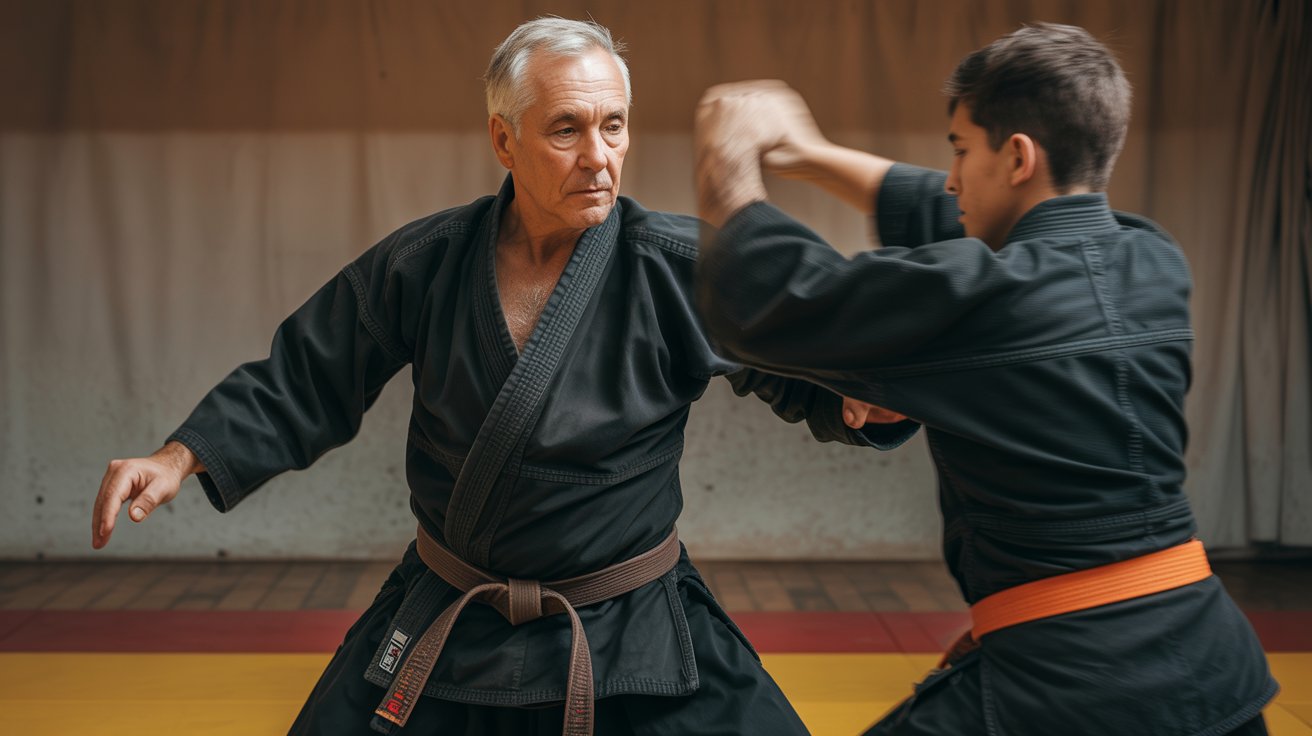
Bujinkan martial arts doesn’t fit neatly into modern expectations. It doesn’t promise quick mastery. It doesn’t revolve around trophies or highlight reels. And that’s exactly why it continues to quietly attract people who are searching for something deeper than surface-level fighting skills.
At its heart, Bujinkan is about survival—physical, mental, and situational. It’s a system built not for spectators, but for reality.
What Bujinkan Martial Arts Really Is
Bujinkan martial arts is a living Japanese martial tradition that preserves combat knowledge developed in environments where failure meant injury or death. It is not a sport, not a self-defense shortcut, and not a performance art. It is a study of movement, awareness, and decision-making under pressure.
Rather than collecting techniques, practitioners learn how the body naturally moves when it’s balanced, relaxed, and responsive.
Where It Comes From
The Bujinkan organization brings together nine traditional schools that span both samurai and ninjutsu lineages. These schools were forged in times when combat was unpredictable and unforgiving—long before rules, gloves, or mats existed.
Masaaki Hatsumi and the Lineage
Bujinkan is led by Masaaki Hatsumi, who received full transmission from Toshitsugu Takamatsu, a man known for applying these teachings outside the dojo. That lineage matters, because Bujinkan is not reconstructed theory—it’s inherited experience.
Why It Looks So Different
To someone used to modern martial arts, Bujinkan can look almost casual. Movements appear soft. Attacks seem slow. What’s easy to miss is the precision underneath. Bujinkan focuses on timing, balance, and intent—elements that don’t announce themselves loudly but decide outcomes quickly.
The Nine Schools Behind Bujinkan
Each ryuha within Bujinkan contributes a different strategic lens.
Body Mechanics First
Taijutsu teaches you how to move without fighting your own body. When posture and alignment are correct, strength becomes almost irrelevant. Small people learn to handle larger ones. Older practitioners remain effective without forcing speed or power.
Samurai and Ninja Perspectives
Some schools emphasize battlefield tactics and formal weapon use. Others reflect stealth, misdirection, and adaptability. Together, they form a system that doesn’t rely on a single solution.
Weapons as Teachers
Weapons in Bujinkan are not just tools—they’re feedback mechanisms. They reveal distance, timing, and mistakes instantly. Training with weapons sharpens empty-hand skill rather than distracting from it.
How Training Actually Works
Bujinkan training doesn’t rush understanding. It lets it unfold.
Kata That Aren’t Frozen
Kata in Bujinkan are starting points, not endpoints. They teach principles, not choreography. Over time, those patterns dissolve into spontaneous response.
Why You Won’t See Sport Sparring
Rules create habits. Habits create blind spots. Bujinkan avoids rigid sparring so practitioners don’t become dependent on predictable exchanges. Instead, training stays fluid, exploratory, and adaptive.
Preparing for Uncertainty
Real conflict is messy. Bujinkan martial arts embraces that reality by removing artificial structure and teaching students to stay calm and responsive when plans collapse.
Does Bujinkan Work for Real Self-Defense?
That question assumes self-defense starts with punches. Bujinkan teaches that it starts with awareness.
Survival Over Dominance
The goal isn’t to win—it’s to get home safely. Bujinkan emphasizes positioning, escape, and control over brute force or prolonged engagement.
The Psychological Layer
Remaining calm under stress is a skill. Bujinkan trains that skill through exposure to uncertainty, not rehearsed certainty.
Who Bujinkan Is—and Isn’t—For
Bujinkan rewards patience.
Beginners and Veterans
New students often adapt faster because they don’t have habits to unlearn. Experienced martial artists eventually benefit deeply, once they let go of forcing outcomes.
Age and Physical Limits
Because it relies on structure and efficiency, Bujinkan martial arts remains viable well into later life. The limiting factor isn’t fitness—it’s mindset.
Choosing the Right Dojo
Quality matters more than location.
What to Look For
Authentic instruction emphasizes fundamentals, safety, and continuous learning—not theatrics or inflated ranks.
Your First Month
Expect confusion. Expect subtlety. Progress won’t feel dramatic, but it will feel real.
Products / Tools / Resources
-
Traditional Bujinkan training uniforms (gi and tabi)
-
Training weapons: bokken, hanbo, and padded tanto
-
Books by Masaaki Hatsumi on movement, strategy, and mindset
-
Reputable Bujinkan dojo directories and instructor lineage resources
- Legitimate Bujinkan Online Training Programs