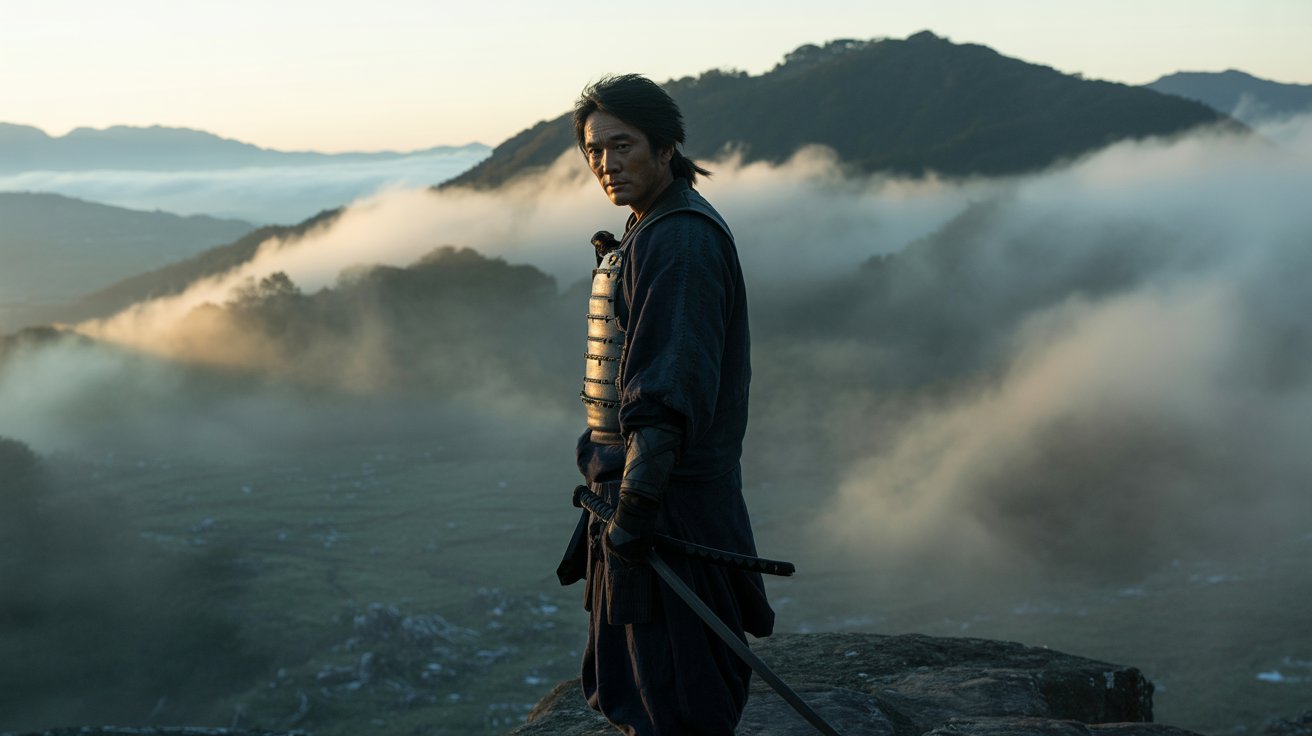
Some martial traditions shout their presence through tournaments, demonstrations, and global branding.
Gyokushin-ryū Ninpō does not.
It survives quietly—embedded in lineage charts, whispered in advanced training halls, preserved in scrolls that were never meant for public display. To understand Gyokushin-ryū is not simply to trace a technical syllabus. It is to step into the psychological architecture of survival during one of Japan’s most volatile eras.
And it begins in chaos.
When Japan Was Fractured: The World That Shaped Gyokushin-ryū
The Sengoku period was not romantic. It was unstable, unpredictable, and merciless. Alliances dissolved without warning. Castles changed hands overnight. Strategy mattered more than pride.
Open battlefield systems—sword schools, spear formations, armored combat—had their place. But war was not won by steel alone. It was won by information.
Who moved first.
Who betrayed whom.
Who knew something others did not.
In this fractured landscape, the roots of ninpō traditions took hold. Not theatrical “ninja myths,” but structured systems built around intelligence, infiltration, and psychological endurance. Gyokushin-ryū emerged within that atmosphere—a discipline shaped by necessity, not spectacle.
The Rise of Strategic Specialists
Shinobi were not fantasy assassins leaping across rooftops in black uniforms. They were problem-solvers. Scouts. Strategists. Survivors trained to move through unstable territory without drawing attention.
Where conventional systems prepared warriors for frontal confrontation, ninpō traditions prepared practitioners for uncertainty.
Gyokushin-ryū aligns with this quieter philosophy.
Its profile suggests adaptability over dominance. Awareness over aggression. Emotional control over dramatic force. It belongs to a lineage of thinking arts—systems that treated survival as a layered equation rather than a single strike.
The Meaning Behind the Name: “Jade Heart”
Names in classical Japanese traditions are rarely arbitrary.
“Gyokushin” translates to “Jade Heart.”
Jade symbolizes resilience and refinement—strength that does not fracture under pressure. A heart suggests inner stability, emotional control, and moral center.
Together, the name signals something deeper than physical technique. It implies a practitioner who remains composed while circumstances collapse around them.
This philosophical undertone sets the tone for understanding the school’s origins.
The Founding and Its Shadows
Like many koryū traditions, Gyokushin-ryū’s founder is referenced through lineage records and oral transmission rather than publicly archived documentation. Densho—handwritten scrolls passed from teacher to successor—serve as the backbone of its preservation.
These scrolls were not marketing brochures. They were private transmissions. Practical documents containing:
-
Technical catalogs
-
Strategic notes
-
Ethical principles
-
Succession acknowledgments
Because secrecy was part of survival, documentation gaps are inevitable. That absence does not erase existence—it reflects the operational reality of the era.
What remains consistent across references is Gyokushin-ryū’s association with kosshijutsu principles and intelligence-focused application.
The Technical DNA: Precision Over Power
If battlefield arts were built for armored collisions, Gyokushin-ryū appears built for moments when armor was irrelevant.
Kosshijutsu—often connected to the tradition—focuses on skeletal alignment, nerve centers, structural weaknesses. It is surgical rather than explosive.
Instead of overwhelming an opponent, the objective is disruption:
Break balance.
Collapse structure.
Control space.
And do so efficiently.
This precision reflects a mindset tuned to unpredictability. When escape routes disappear, when weapons are unavailable, when numbers are not in your favor—economy of motion becomes survival.
Strategy Beyond Technique
Ninpō is frequently misunderstood as a synonym for “ninjutsu.” But historically, ninpō implies something broader: a philosophy of endurance and adaptation.
Within this lens, Gyokushin-ryū appears less like a collection of movements and more like a strategic framework.
Training likely emphasized:
-
Situational awareness under stress
-
Emotional neutrality in confrontation
-
Environmental leverage
-
Psychological misdirection
A “Jade Heart” does not panic. It adjusts.
Transmission Through Time
As Japan modernized, many smaller martial traditions faced extinction. Some were absorbed into broader systems to ensure survival. Others faded.
Gyokushin-ryū endured by integration. Rather than existing as a commercial standalone brand, its teachings are preserved within larger ninpō curricula.
This consolidation protected knowledge—but blurred historical boundaries. Clear documentation becomes harder to isolate when lineages intertwine.
Yet survival itself becomes evidence of value.
Separating Myth From Measured History
Modern media has reshaped the ninja into a cultural icon—smoke bombs, theatrical costumes, exaggerated mystique.
Classical traditions, however, were grounded in pragmatism. Survival demanded discipline, not dramatics.
Scholars approach ninpō traditions cautiously due to limited primary documents. Oral transmission plays a significant role in Japanese martial culture. The key is balance: neither blind romanticism nor automatic dismissal.
What can be stated with grounded confidence?
-
Gyokushin-ryū is referenced within recognized ninpō lineage discussions.
-
It is associated with kosshijutsu methodology.
-
Its identity aligns with strategic adaptability and precision.
-
Its philosophical framing emphasizes internal resilience.
Those pillars provide enough structural clarity to move beyond myth.
Why Gyokushin-ryū Still Matters
In an era obsessed with visibility, Gyokushin-ryū offers something quieter.
It teaches composure when variables multiply.
It emphasizes control when environments destabilize.
It values structural understanding over raw aggression.
Modern practitioners—whether studying broader ninpō systems or classical martial philosophy—inherit fragments of this strategic DNA. Not necessarily as labeled techniques, but as embedded principles:
Stay calm.
Stay aware.
Adapt before reacting.
The “Jade Heart” is not a relic of feudal Japan. It is a psychological posture that transcends era.
Questions Practitioners Quietly Ask
Is Gyokushin-ryū historically verified?
Documentation is limited, as with many classical schools tied to intelligence work. Its presence within recognized lineage discussions supports its legitimacy within traditional frameworks.
Is it still practiced today?
Not commonly as a standalone system. Its teachings are preserved within larger ninpō traditions.
How is it different from other ninja schools?
Its technical identity is frequently linked to kosshijutsu precision and strategic adaptability rather than heavy weapon specialization.
Was it purely combat-focused?
No. Like many ninpō systems, its emphasis extended to intelligence gathering, survival strategy, and psychological composure.
Products / Tools / Resources
If you’re exploring Gyokushin-ryū Ninpō seriously, depth matters more than surface exposure. Consider:
-
Classical ninpō historical texts that explore lineage and densho interpretation
-
Anatomy references to better understand kosshijutsu principles
-
Training journals to document strategic evolution and mindset shifts
-
Dojo environments that emphasize traditional structure rather than theatrical branding
Seek instruction that prioritizes context, not performance. Authentic transmission values discipline over spectacle.
Because at its core, Gyokushin-ryū is not about appearing formidable.
It is about remaining unshaken.