When Japan Was at War With Itself
The story of Gikan-ryū Koppōjutsu history and origins does not begin in a quiet dojo. It begins in smoke. In mud. In the violent uncertainty of Sengoku-era Japan.
The 15th and 16th centuries were defined by fragmentation. Daimyō fought for dominance. Alliances shifted without warning. Survival wasn’t philosophical — it was mechanical. A warrior either adapted… or disappeared.
Martial systems born in this climate were not artistic expressions. They were solutions.
And Gikan-ryū emerged as one of them.
The Age That Shaped It: Sengoku Jidai
The Sengoku Jidai — the Warring States Period — forced innovation. Armor changed. Weapons evolved. Battlefield chaos demanded adaptability.
It was during this relentless instability that ryūha — formalized martial schools — began to crystallize. Each school preserved a tactical edge. Some emphasized swordsmanship. Others focused on grappling, flexibility, or internal power generation.
Koppōjutsu entered this ecosystem as something distinct.
Not muscle against muscle.
Bone against structure.
The very word koppō implies skeletal method — an approach that targets the frame itself. The collarbone. The jawline. The forearm. The knee joint. Instead of overwhelming force, the aim was structural collapse.
In armored combat, this mattered.
And within that tactical reality, Gikan-ryū took shape.
The Founder: Uryū Hangan Gikanbo
Traditional accounts attribute the founding of Gikan-ryū to Uryū Hangan Gikanbo — a figure positioned within the Sengoku period’s martial culture.
Documentation is sparse. That alone unsettles modern readers. We are conditioned to trust paper trails.
But classical Japanese martial transmission rarely prioritized record-keeping for public scrutiny. Knowledge moved through people, not printing presses.
Uryū is described not as an inventor of techniques, but as a refiner. A man who shaped battlefield experience into a codified structure. What he passed forward was not random movement, but principles:
-
Enter at angles.
-
Break balance instantly.
-
Destroy structure before chasing dominance.
Even the name “Gikan” carries tonal weight — often interpreted as conveying righteousness or disciplined force. Not brutality. Control.
That distinction matters.
The Technical DNA of Early Gikan-ryū
Angles Instead of Collision
One defining element attributed to Gikan-ryū is its angular entry. Instead of meeting an opponent head-on, practitioners shift diagonally — slipping outside the opponent’s power line.
It is subtle.
But devastating.
An opponent committed forward suddenly finds their structure misaligned. Hips disconnected. Shoulders rotated off-axis. Base compromised.
From there, skeletal targeting becomes viable.
Bone-Focused Striking
Koppōjutsu is not about surface pain. It is about structural interruption.
The ulna. The radius. The clavicle. The mandible. The ribs. The knee.
These are not random targets. They are control points. Damage them, and mobility falters. Alignment fails. Strength becomes irrelevant.
The genius of Gikan-ryū lies in its economy. It does not waste motion. It does not pursue prolonged exchange. It collapses framework.
And in warfare, collapse is final.
Posture as Psychological Warfare
Accounts describe strong, upright kamae within Gikan-ryū transmission.
Posture is more than biomechanics.
It signals intention.
Before the first movement, the opponent reads resolve. Structure reflects mindset. In feudal combat, hesitation could be fatal. A firm stance projected dominance before engagement even began.
This psychological dimension intertwines with its physical mechanics.
Why So Little Was Written
When exploring Gikan-ryū Koppōjutsu history and origins, a question inevitably surfaces:
If it is authentic… why is it obscure?
Several possibilities exist.
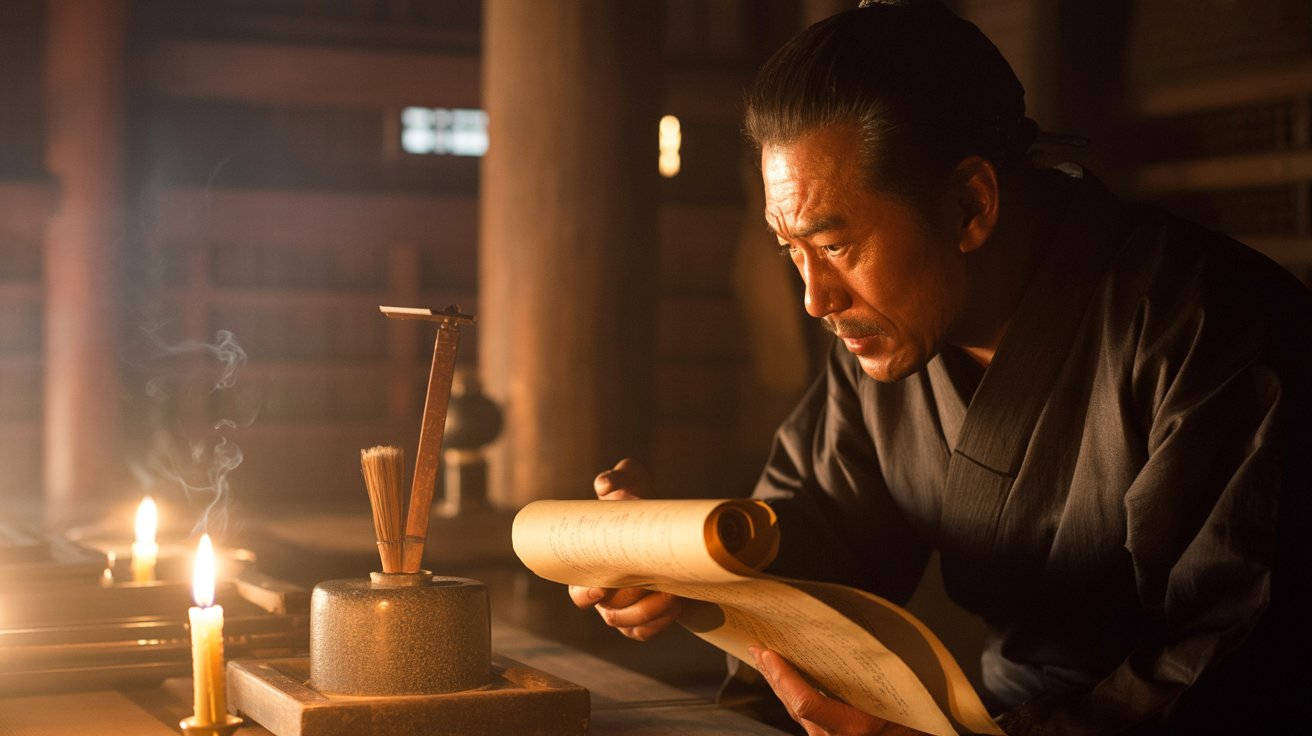
Transmission in classical Japan was often private. Densho — scrolls used for preservation — functioned as memory aids, not encyclopedias. Without oral instruction, their contents are incomplete.
Some knowledge was deliberately restricted. Secrecy was not mysticism. It was strategy.
War consumes paper. Fire destroys archives. And many schools simply vanished when no successor remained.
Survival does not always correlate with popularity.
Sometimes, it correlates with discretion.
The Lineage Thread Into the Modern Era
In contemporary practice, Gikan-ryū survives within transmission associated with the Bujinkan organization under Masaaki Hatsumi.
Its presence within this framework keeps its name alive — though it remains less publicly demonstrated compared to other classical lineages.
This creates friction.
Modern students often seek documented verification. Historians seek corroborated evidence. Practitioners seek lineage continuity.
Gikan-ryū stands at that crossroads.
Its authority rests less on academic citation and more on teacher-to-student transmission — a model consistent with many koryū traditions.
What Can We Actually Confirm?
Absolute historical certainty is rare in medieval martial arts.
Yet contextual probability tells a coherent story:
-
Specialized combat schools flourished during the Sengoku period.
-
Koppōjutsu methodologies emphasizing skeletal disruption existed.
-
Oral and densho-based transmission was the norm.
-
Some lineages survived through consolidation into modern organizations.
Gikan-ryū fits this pattern.
Is every detail provable? No.
Is its existence plausible within historical context? Strongly.
The absence of widespread documentation does not equal absence of origin.
It reflects the preservation model of its time.
The Question Everyone Quietly Asks
Is Gikan-ryū real?
The better question is this:
Real by whose standard?
If “real” means mass documentation, it will always feel incomplete.
If “real” means preserved within living lineage, transmitted through instruction, consistent with Sengoku-era martial evolution — then its historical footprint becomes far less mysterious.
Skepticism is healthy. So is context.
The truth often lives between them.
Products / Tools / Resources
If you’re exploring Gikan-ryū Koppōjutsu history and origins more deeply, consider:
-
Scholarly works on Sengoku-era warfare for contextual grounding.
-
Books and publications authored by Masaaki Hatsumi related to classical Japanese martial traditions.
-
Reputable Bujinkan dojos with lineage transparency.
-
Academic research on koryū transmission models and densho culture.
Approach the subject with intellectual curiosity rather than blind belief. The richness of classical martial arts lies not only in what is documented — but in what has endured.
Gikan-ryū Koppōjutsu history and origins