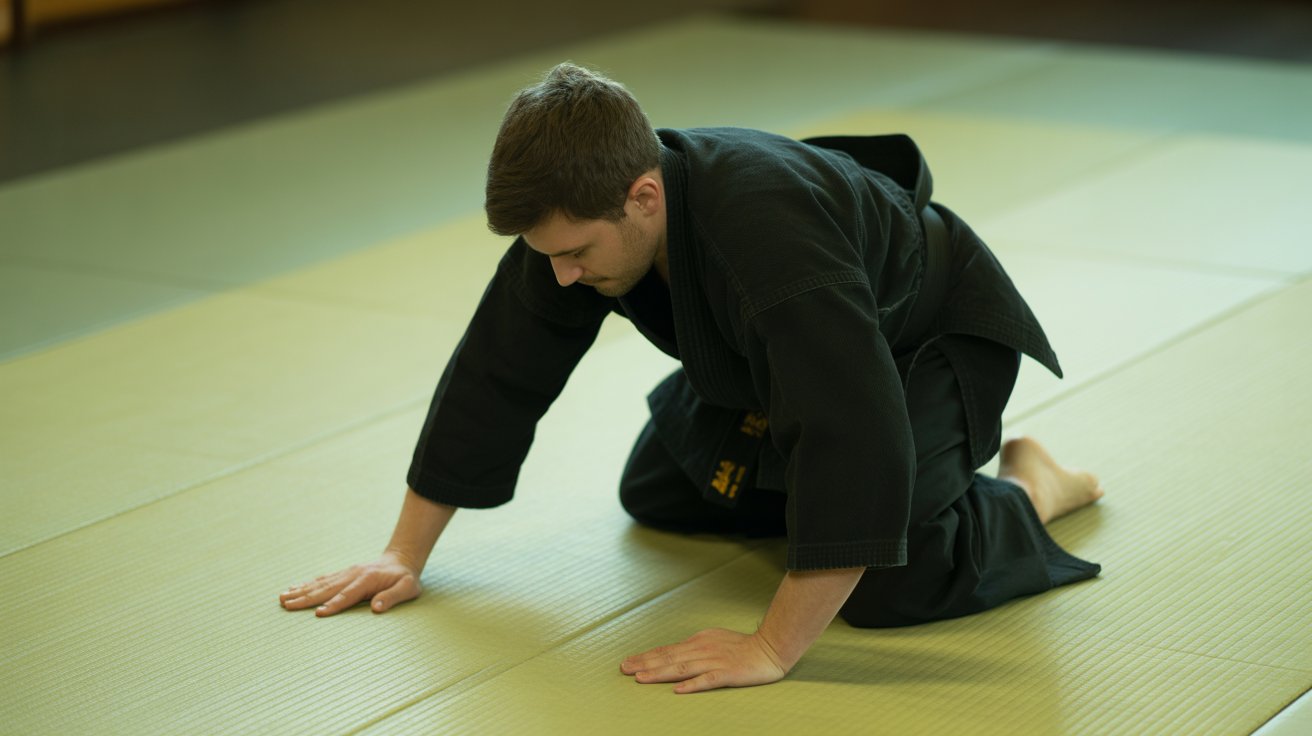
Ninjutsu was never designed to be loud. It doesn’t announce itself. It doesn’t chase attention. Historically, it thrived in quiet competence—adaptable, practical, and deeply human. That subtlety is exactly why modern seekers often struggle to find real guidance, especially when exploring ninjutsu training at home.
Search online and you’ll see spinning weapons, dramatic stances, and cinematic flair. None of that defines ninjutsu. Real training looks restrained. Almost plain. And that simplicity is deceptive, because beneath it lives a system built for survival, awareness, and intelligent movement under uncertainty.
If you’re training at home, the goal isn’t imitation. It’s cultivation—of body, perception, and judgment. That can be done remotely, but only when approached honestly and with the right structure.
What Ninjutsu Actually Is (And Why So Much Online Content Misses the Mark)
Beyond the Costume: Letting Go of the Ninja Fantasy
The popular image of ninjas—masked, acrobatic, endlessly armed—is a modern invention. Real ninjutsu evolved as a survival methodology. It prioritizes:
-
Calm decision-making under stress
-
Efficient, natural movement
-
Environmental awareness
-
Avoidance before confrontation
If a technique requires exaggerated poses, theatrical speed, or constant tension, it’s already drifting away from the art’s core.
True ninjutsu often looks unimpressive to outsiders. To practitioners, that quiet efficiency is the point.
Lineage Still Matters—Even When Training at Home
Authentic ninjutsu is preserved through established lineages, most notably:
-
Genbukan
-
Jinenkan
These organizations transmit multiple classical schools (ryūha), each contributing principles rather than rigid techniques. This matters deeply for home training. Without a lineage-based framework, solo practice becomes guesswork—and guesswork hardens into habit.
The art survives through transmission, not imitation.
Can You Truly Train Ninjutsu at Home?
Yes—but with clarity.
Home training works when it is guided, accountable, and structurally sound. It fails when it becomes isolated experimentation.
What Can Be Trained Effectively at Home
With proper instruction—whether in-person or through an accredited online program—you can develop:
-
Foundational taijutsu (body mechanics)
-
Balance and posture
-
Joint conditioning and durability
-
Natural stepping, angling, and turning
-
Ukemi (rolling and falling)
-
Breathing control and emotional regulation
These are not “warm-ups.” They are the art.
What Requires Oversight and In-Person Testing
Certain aspects of ninjutsu demand direct evaluation:
-
Timing against another human being
-
Distance, pressure, and unpredictability
-
Subtle off-balancing and tactile sensitivity
This is why legitimate systems maintain in-person testing standards, especially at higher ranks.
Clarifying the Black Belt Question (Important)
A common myth is that black belt rank cannot be earned through home or online training. That isn’t entirely accurate.
A black belt can be earned while training at home, provided the student:
-
Is enrolled in an accredited, lineage-recognized online school or course
-
Trains under a qualified instructor who actively reviews progress
-
Submits required material according to organizational standards
However, there is a critical distinction:
-
Lower ranks may be tested remotely, often via recorded video submission
-
Black belt testing is conducted in person, ensuring integrity, pressure testing, and direct transmission
Rank in ninjutsu reflects trust and understanding, not convenience. Distance learning can support the journey—but certain thresholds must still be crossed face to face.
Core Principles for Authentic Home Training
Taijutsu First—Always
Taijutsu is the heart of ninjutsu. Not techniques. Not tricks. The body itself.
At home, this means learning to:
-
Move without stiffness
-
Stay balanced while changing direction
-
Remain calm while unstable
Progress isn’t measured by speed. It’s measured by control.
Posture, Balance, and Natural Alignment
Correct posture feels almost unremarkable:
-
Spine upright, not rigid
-
Knees soft
-
Weight centered
-
Breathing unforced
Train this by standing well. Then walking well. Then turning well. Everything else grows from that.
A Simple, Honest Home Training Routine
This routine prioritizes longevity and authenticity. Total time: 20–30 minutes.
Joint Preparation (5–7 Minutes)
Slow, circular movements:
-
Neck and shoulders
-
Hips and knees
-
Ankles and spine
Nothing rushed. Nothing forced.
Movement Practice (15–20 Minutes)
Natural Walking
Move slowly. Transfer weight cleanly. Let the upper body remain quiet.
Angling and Turning
Practice changing direction without leaning or collapsing.
Ukemi (If Space Allows)
Begin seated. Progress gradually. Smoothness over bravery.
Rolling isn’t about falling—it’s about staying composed while the ground disappears.
Mistakes That Quietly Sabotage Progress
Weapons Before Body
Weapons magnify whatever movement you already have. If your taijutsu is tense or unstable, weapons will amplify the flaw.
Earn the right to hold them.
Chasing Speed
Fast training feels productive. It isn’t.
Speed hides imbalance. Slow movement exposes truth—and truth is what builds real skill.
Transitioning From Home Training to Deeper Instruction
You’re Ready When…
-
Movement feels relaxed, not forced
-
Falling no longer triggers panic
-
You’re more interested in sensation than appearance
-
You value correction over validation
At that stage, good instruction doesn’t add layers—it removes them.
Choosing Legitimate Guidance
Seek instructors who:
-
Clearly state lineage
-
Emphasize fundamentals
-
Move calmly and efficiently
-
Avoid grand promises
Real teachers dismantle illusion. They don’t sell it.
Products / Tools / Resources
-
Lineage-recognized online ninjutsu programs with instructor feedback
-
Tatami or padded flooring for safe ukemi practice
-
Simple conditioning tools (makiwara pads, grip trainers, resistance bands)
-
Video recording setup for submitting technique reviews
-
Books and densho-based texts from verified instructors