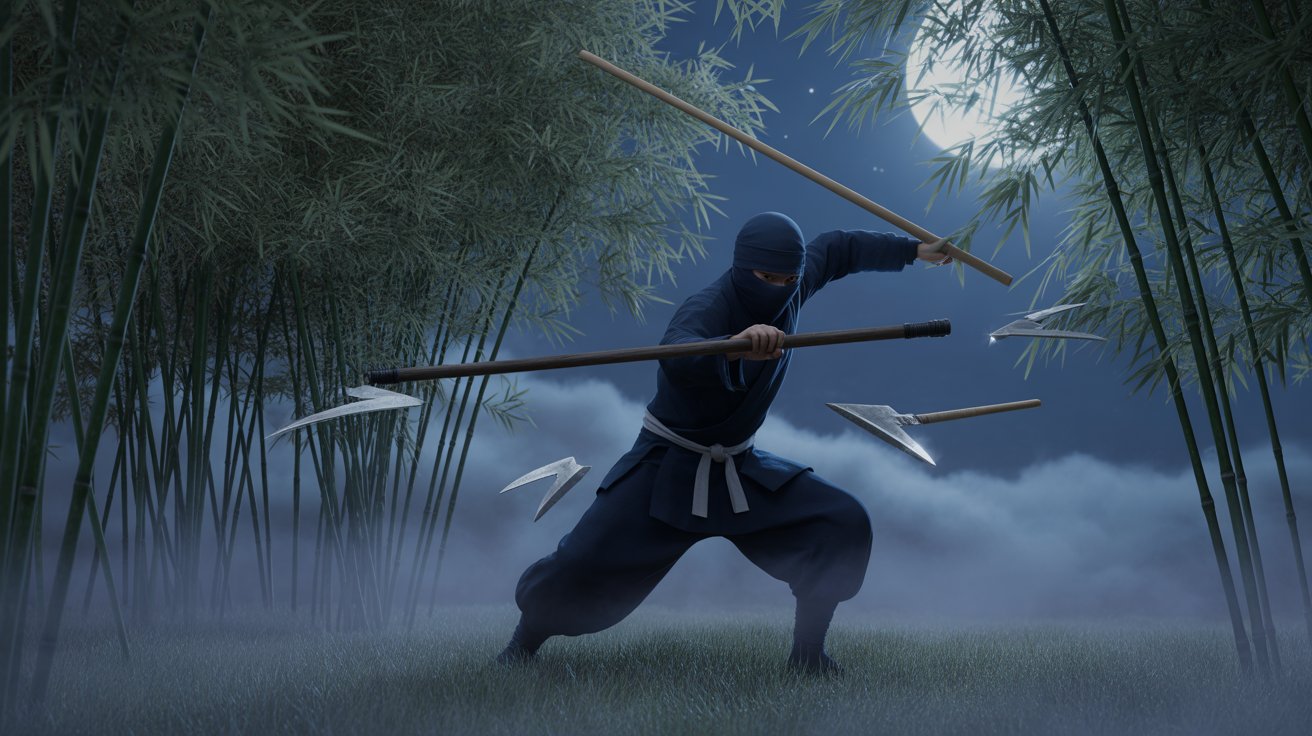
When most people hear “ninjutsu weapons training,” their imagination jumps straight to spectacle. Exotic blades. Shadowy assassins. Impossible acrobatics. It’s a powerful image—but it’s also deeply misleading.
Real ninjutsu weapons training is quieter than that. Smarter. Less about domination and more about survival. Weapons were never trophies or status symbols. They were tools, chosen for function, adaptability, and necessity. And understanding that difference changes everything about how this art is practiced today.
Weapons Were Never the Point
Historically, ninjutsu was built around one idea: survive the situation you’re in, not the one you wish you were in. Weapons existed to support that goal, not define it.
A practitioner might carry a sword—or might not. They might rely on a chain, a stick, or nothing at all. What mattered was awareness, timing, and the ability to adapt when plans fell apart.
That philosophy still defines authentic ninjutsu weapons training.
Why Empty-Hand Skills Come First
Before any weapon enters the picture, students learn how to move. Footwork. Balance. Distance. How to read intent in another person’s posture. Weapons amplify these skills—but without them, a weapon just magnifies mistakes.
This is why legitimate training introduces weapons slowly. Not because they’re mystical, but because they demand responsibility.
The Weapons Most People Get Wrong
The straight-bladed “ninja sword” is a modern invention. In reality, practitioners used what was available. Standard swords. Farm tools. Short blades. Even ordinary objects pressed into service when nothing else was an option.
Shuriken weren’t meant to kill. They distracted. Delayed. Forced reactions.
Staff weapons weren’t basic—they were sophisticated teachers of leverage, alignment, and range.
Every tool had a purpose. None were ornamental.
How Training Actually Feels
Training is methodical. Quiet. Sometimes repetitive. Solo drills refine precision. Partner work teaches control and restraint. There’s very little emphasis on winning and a great deal of emphasis on not losing unnecessarily.
Distance matters more than power. Timing matters more than speed. Deception matters more than strength.
Why People Still Train Today
Modern practitioners aren’t preparing for medieval missions. They’re training awareness. Judgment. Calm under pressure. Weapons training sharpens these qualities—even when the weapons themselves never leave the dojo.
The value isn’t in the blade. It’s in how the mind learns to move before danger fully appears.
What to Look for—and What to Avoid
Real instruction feels grounded. Patient. Unspectacular at first glance.
Be cautious of:
-
Instant mastery promises
-
Heavy focus on weapons before movement
-
Mythology replacing explanation
Authentic training looks almost boring to outsiders. That’s usually a good sign.
Products / Tools / Resources
-
Training bokken and padded weapons for safe practice
-
Hanbō or walking-stick-length staffs
-
Books and seminars from recognized ninjutsu lineages
-
Local dojos emphasizing fundamentals over theatrics
- Online Ninjutsu Weapons Course