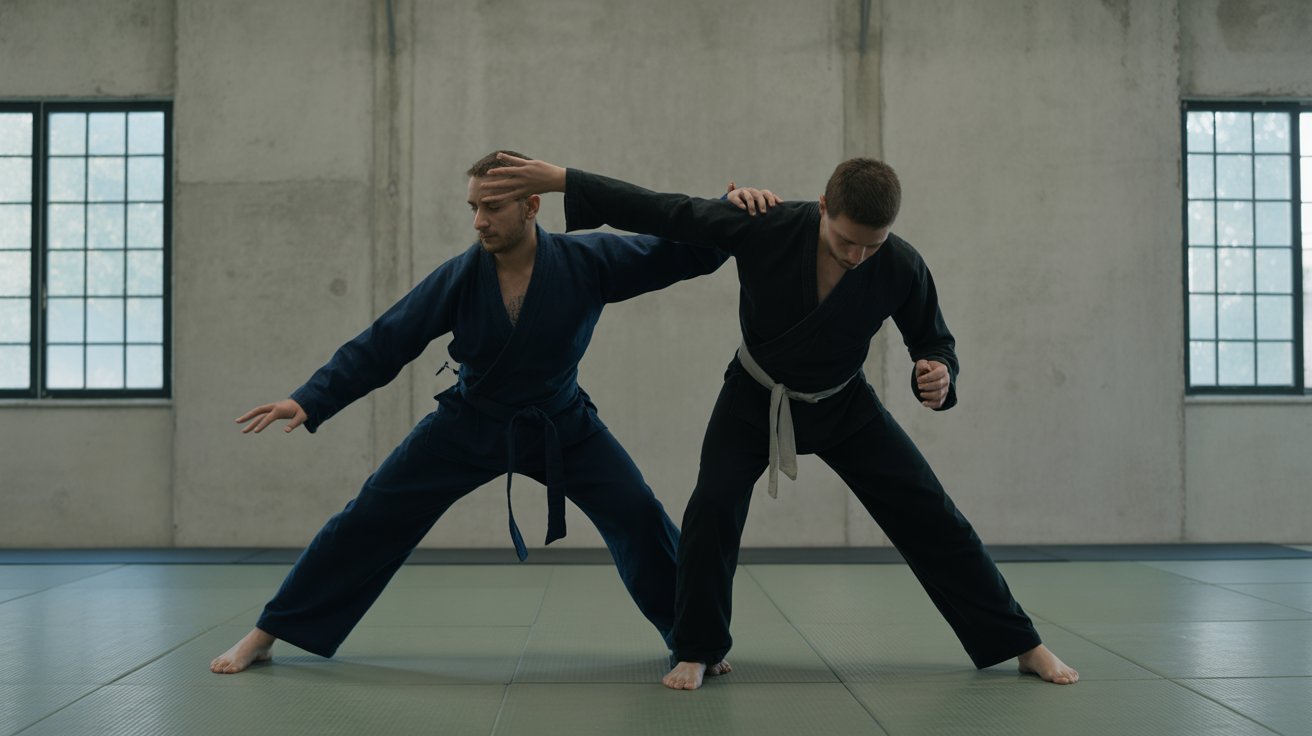
Most people don’t stumble into Bujinkan Ninjutsu by accident.
They arrive after something else failed to satisfy them. A sport that felt too narrow. A system that promised effectiveness but delivered rigidity. Or a quiet intuition that real martial skill should feel calmer, deeper, and more adaptable than what they’ve seen.
Bujinkan Ninjutsu training doesn’t try to impress you on day one. It doesn’t rush to prove itself. And that’s exactly why beginners who stay tend to stay for years.
This is what your first year of Bujinkan Ninjutsu training actually looks like—physically, mentally, and internally.
Why Beginners Gravitate Toward Bujinkan Ninjutsu
For many beginners, the appeal isn’t the word ninjutsu. It’s the absence of spectacle.
There are no trophies waiting at the end. No tournaments. No highlight-reel moments designed for an audience. What replaces them is something quieter—and far more demanding.
Depth Instead of Performance
Bujinkan training doesn’t ask you to perform techniques. It asks you to feel them.
From the beginning, you’re guided away from memorized combinations and toward balance, posture, distance, and timing. Progress is measured less by how much you can do, and more by how little effort it takes you to do it.
That shift alone is uncomfortable for beginners used to external validation—but deeply rewarding for those who want real skill.
Growth Without Comparison
You won’t spend much time measuring yourself against others. In fact, comparison quickly becomes irrelevant.
Everyone is working on their own limitations:
-
Tension in the shoulders
-
Poor balance under pressure
-
Overthinking movement
Bujinkan Ninjutsu training creates a space where improvement feels personal, not competitive.
Walking Into Your First Class
Your first class will likely feel unfamiliar—but not hostile.
The atmosphere is focused, respectful, and calm. People train seriously, but without aggression.
Etiquette Without Ego
You’ll bow when entering the dojo. You’ll show respect to instructors and training partners. Not because anyone demands submission—but because attention matters here. Ego interferes with learning subtle movement, and subtle movement is everything.
Beginners are expected to listen, observe, and move carefully. No one expects perfection.
Movement Before Technique
Early classes focus on preparing your body to learn:
-
Gentle joint rotations
-
Controlled mobility
-
Falling and rolling practice
Ukemi—learning how to fall safely—often surprises beginners. It looks simple. It isn’t. It teaches relaxation under pressure, body awareness, and instinctive response. Skills that quietly shape everything that comes later.
The First 3–6 Months: Laying the Foundation
Bujinkan Ninjutsu doesn’t rush you into complexity. It builds something far more durable first.
Kamae: Learning How to Stand
Postures in Bujinkan aren’t frozen poses. They’re living positions that teach:
-
Structural alignment
-
Balance under force
-
Readiness without stiffness
As a beginner, you’ll start to notice how small changes in posture dramatically affect stability. That realization alone often changes how people move in everyday life.
Ukemi: Falling Without Fear
Rolling and falling practice continues throughout your first year. Over time, fear gives way to trust—trust in your body, your breath, and your ability to adapt mid-movement.
That confidence doesn’t stay on the mat.
Striking and Gripping the Bujinkan Way
Strikes are efficient, targeted, and purposeful. Grips focus on structure rather than strength. Beginners quickly learn that brute force creates tension—and tension makes you slow, predictable, and fragile.
The Mental Side of Training (Where the Real Work Begins)
This is where Bujinkan Ninjutsu training quietly separates itself from most martial systems.
Zanshin: Awareness That Lingers
You’ll be encouraged to stay mentally present before, during, and after techniques. Not drifting. Not anticipating. Just aware.
Over time, beginners start to notice:
-
Movement earlier
-
Intent more clearly
-
Openings without searching for them
This kind of awareness can’t be rushed—and once it develops, it changes how you experience conflict and stress entirely.
Staying Calm When Things Go Wrong
Training partners won’t move exactly as expected. Balance will fail. Techniques will collapse.
Instead of forcing outcomes, beginners learn to adjust. To breathe. To move again without panic. That emotional regulation becomes one of the most valuable skills Bujinkan offers.
Conditioning That Respects the Body
Bujinkan Ninjutsu training isn’t about grinding your body down.
Longevity Over Punishment
Joint health, alignment, and efficiency matter more than intensity. You’ll train hard—but intelligently. Many practitioners continue well into later decades of life without the injuries common in more aggressive systems.
A System That Welcomes All Ages
Beginners range widely in age and athletic background. Progress depends far more on consistency and mindset than raw physical ability.
Ranking, Progress, and the Reality of Advancement
Ranks exist—but they aren’t the point.
Early grades provide structure, not status. Advancement often comes quietly, based on readiness rather than timelines. In good dojos, rank is treated as responsibility, not achievement.
Why Instructor Quality Matters So Much
Because Bujinkan relies on subtle feeling, a good instructor is essential. The best teachers emphasize:
-
Fundamentals over flair
-
Safety over ego
-
Long-term development over fast promotion
Beginners thrive in environments where patience is respected.
Is Bujinkan Ninjutsu the Right Path for You?
Bujinkan Ninjutsu training rewards a certain mindset.
It fits people who value:
-
Adaptability over rigid systems
-
Personal growth over recognition
-
Depth over speed
It may frustrate those who need competition, quick feedback, or constant validation.
Knowing that early helps you commit fully—or walk away honestly.
Products / Tools / Resources
-
Bujinkan Dojo Directory – To locate legitimate training groups and avoid misrepresentation
-
Lightweight Training Gi – Prioritize mobility and comfort over thickness
-
Hanbō or Bō Staff (Beginner-Safe) – Used for distance, timing, and body alignment training
-
Training Journals – Writing after class accelerates awareness and long-term retention
-
Recommended Books by Masaaki Hatsumi – For philosophical and historical context that supports physical training
- Recommended Online Course by 15th dan Doshi Richard Van Donk (personal student of Grandmaster Hatsumi) – For a complete beginner to black belt course with ranking and certification